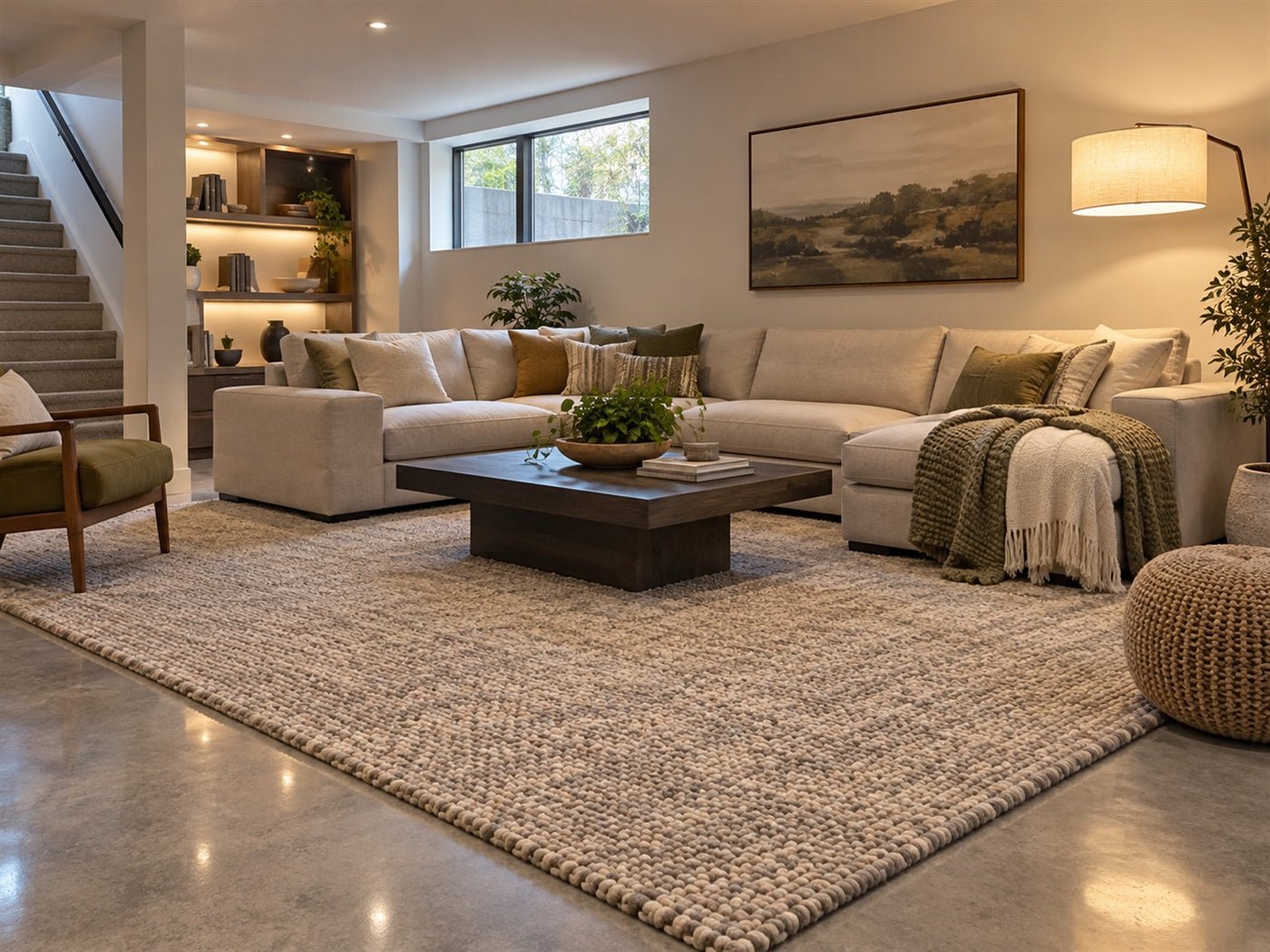
It is a grey November morning, the heat has been off overnight, and the first step out of bed lands on a floor that feels like a slab of ice. Anyone who has lived through a Vancouver Island winter in a home with tile, hardwood, or a concrete basement knows that feeling well.
The good news is that one of the simplest fixes is also one of the coziest. Area rugs in Victoria homes do more than add colour. They add a soft, insulating layer between your feet and a cold floor. This guide is for homeowners and renters who want warmer floors this season. It explains which rug materials hold warmth best, how pile and rug pads help, and where a rug makes the biggest difference, room by room.
Why Floors Feel So Cold in Island Homes
Hard floors pull heat away from your feet quickly when you touch them, which makes them feel colder than the air in the room. Cold air also settles low, so drafts from doors and older windows collect right at floor level. In Victoria, damp winter air adds to that chilly feeling, even when the thermostat says the room is warm.
Older character homes in Fernwood and James Bay often have original fir floors over unheated crawl spaces. Newer condos tend to have hard flooring throughout, and many basement suites sit right on concrete. In all of these homes, area rugs in Victoria living rooms and bedrooms are one of the easiest ways to warm things up without touching the thermostat.
How Area Rugs in Victoria Homes Hold Warmth
A rug warms a room in two ways. Its fibres trap tiny pockets of air, and that air works like insulation between your feet and the floor. A rug also slows the heat you lose on contact, so the surface feels warm and soft rather than hard and cold.
Rugs will not replace your heating, but they make a room feel noticeably more comfortable underfoot. They also absorb sound, which makes busy rooms feel calmer, and they give children a soft place to play on the floor.
Wool: The Warmest Fibre for Cold Floors
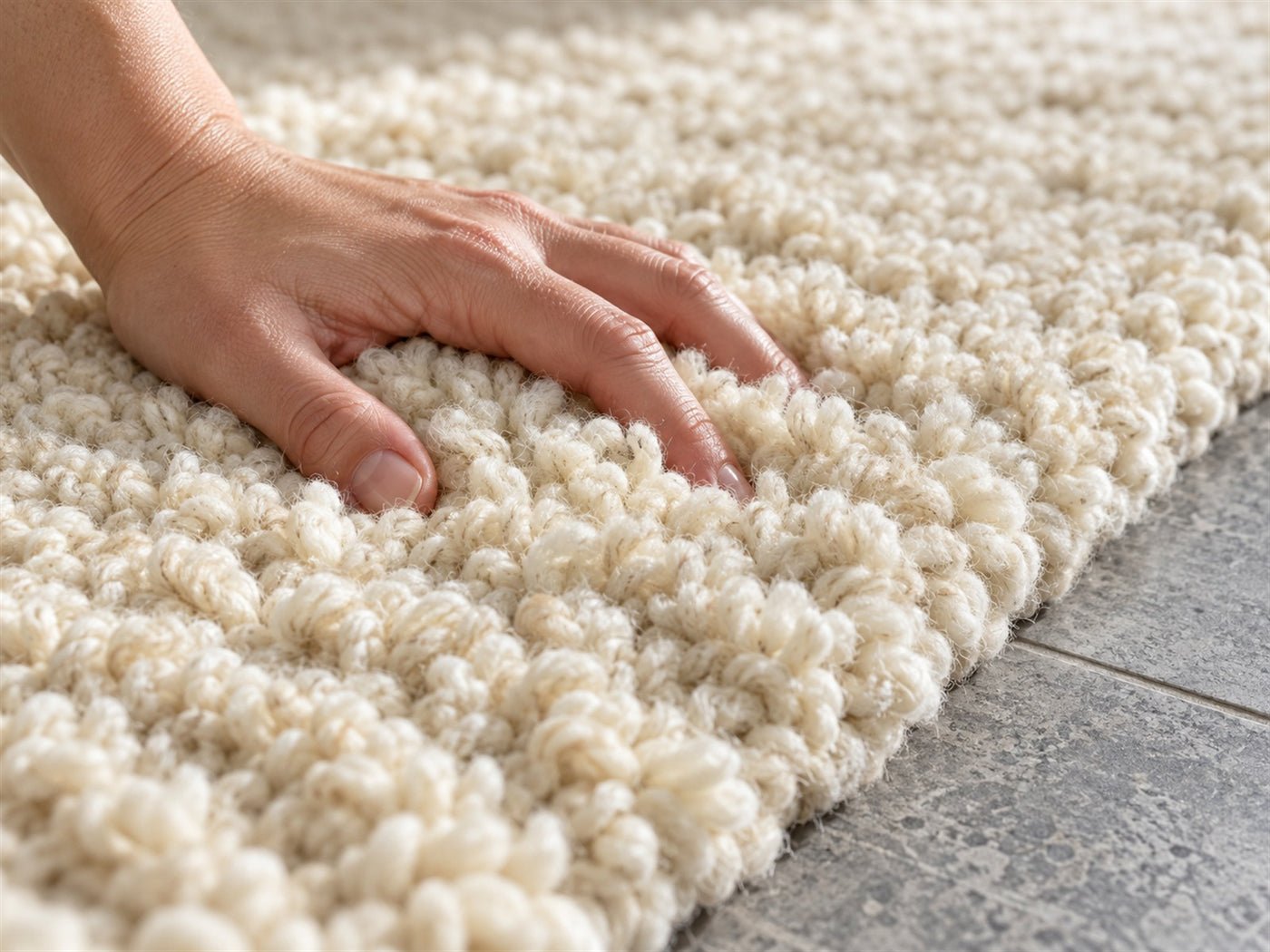
Wool is the classic choice for warmth. Its fibres are naturally crimped, so they trap a lot of air, and they stay springy under foot traffic. Wool also handles moisture well, which helps in a damp coastal climate, and it resists crushing and soil better than many other fibres.
Many of the warmest area rugs in Victoria homes are wool. Wool rugs cost more than most synthetics, but they last for years with simple care. They can shed a little when new, which settles with regular vacuuming. For a living room or bedroom where you want real warmth, wool is hard to beat.
Synthetics and Natural Fibres
Polypropylene, polyester, and nylon rugs are durable, affordable, and easy to clean. Polypropylene resists moisture and stains, which makes it a smart pick for basements, kitchens, and homes with kids or pets. Polyester feels soft, and nylon is very hard-wearing. They are a little less insulating than wool, but a thicker pile helps.
Jute, hemp, and sisal bring natural texture and a relaxed, coastal look. They are firmer and flatter, so they insulate less and can feel coarse under bare feet. A good approach is to use a natural fibre rug as a base layer and add a softer wool or plush rug on top where you sit or stand most.
Pile Height and Density
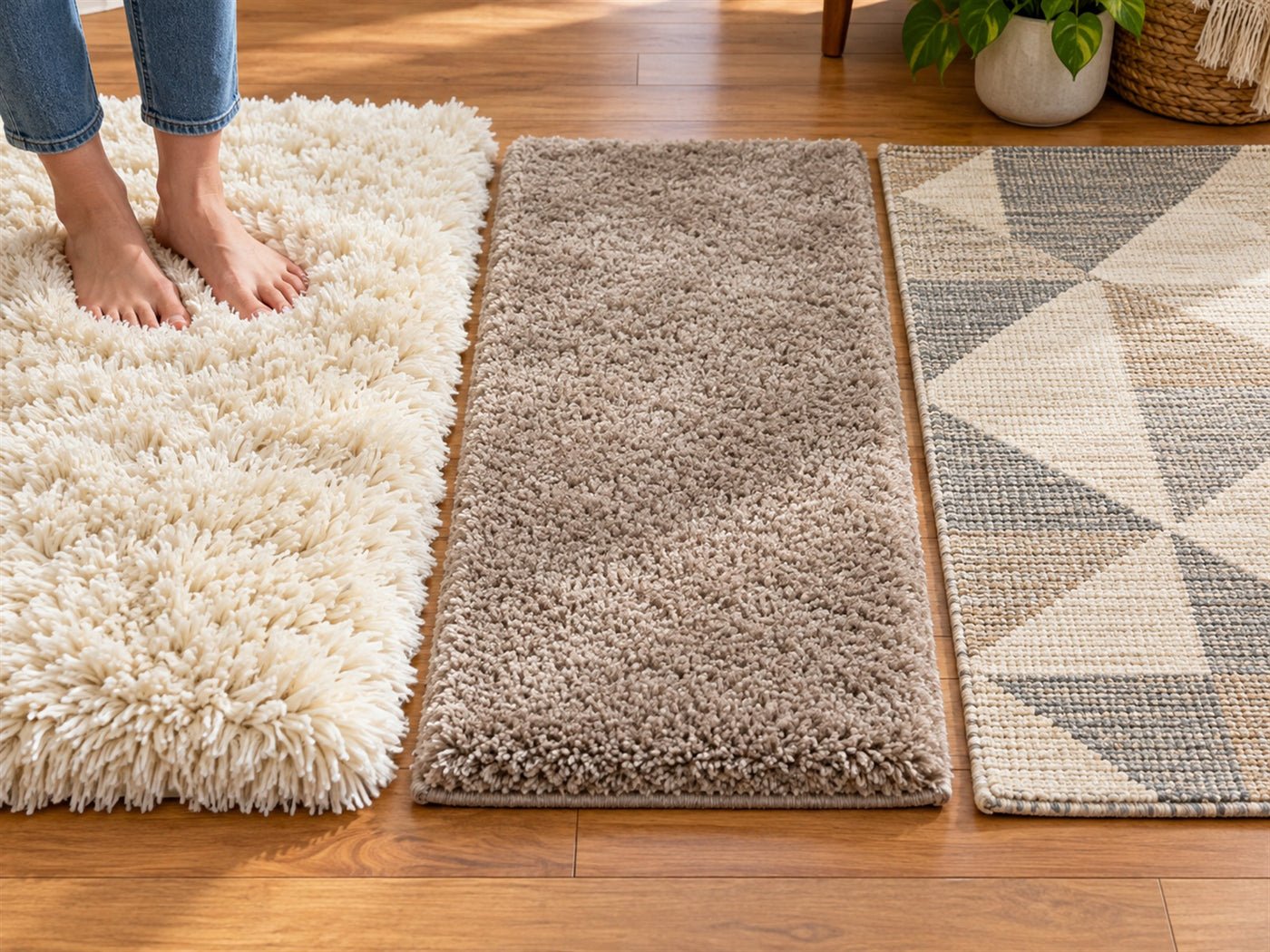
Pile height is the length of a rug's fibres. High-pile and shag rugs, often around one to two inches deep, feel the coziest and trap the most air. Medium-pile and plush rugs balance softness with easier cleaning. Low-pile and flatweave rugs are thin and practical but less insulating.
Density matters as much as height. A dense rug with fibres packed closely together feels warmer and wears better than a loose, thin one. Press your hand into a rug when you shop. If you can easily feel the backing, it will not hold much warmth.
Rug Pads: The Hidden Layer of Insulation
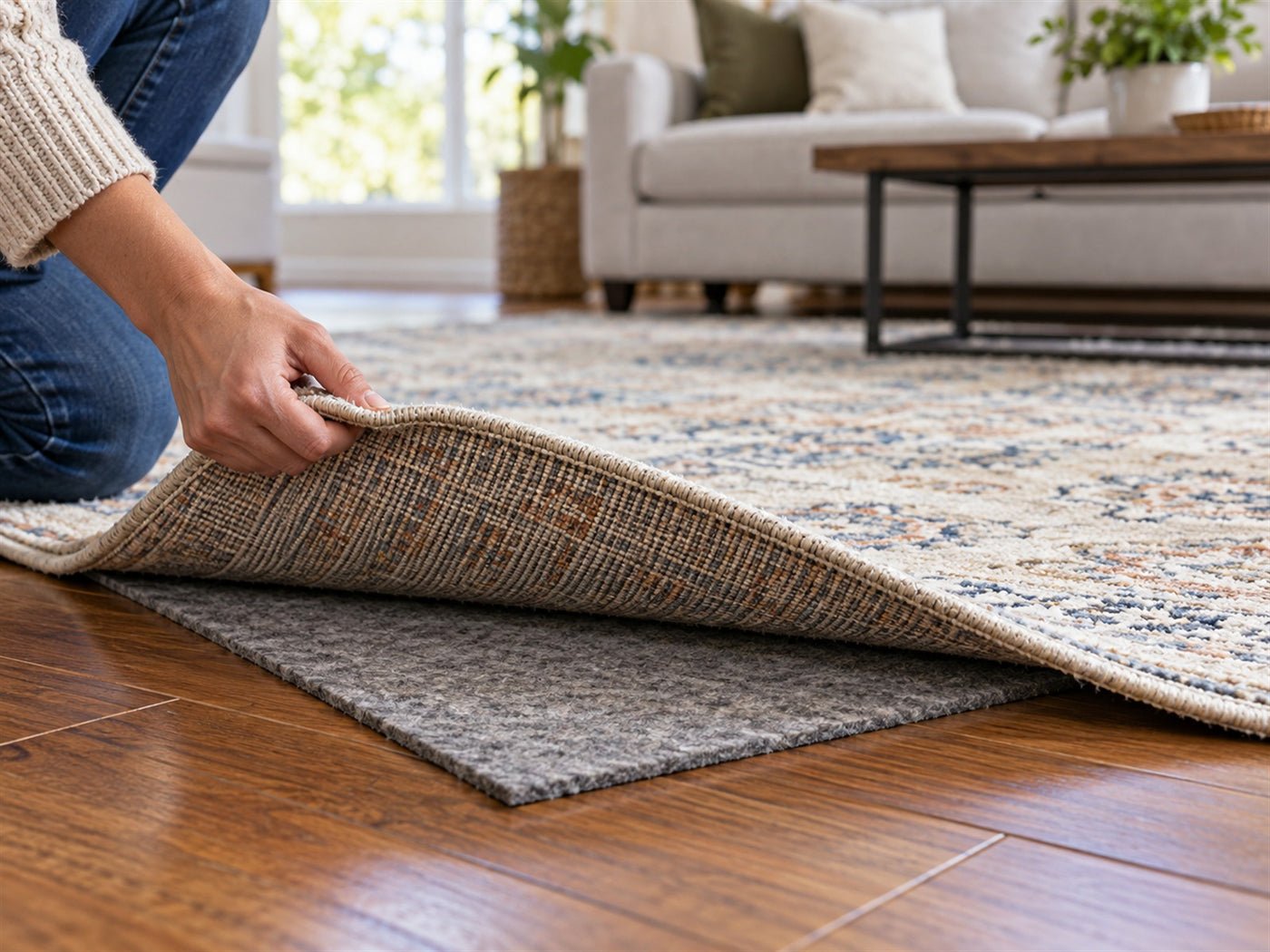
A good rug pad adds cushioning and another layer of insulation between the rug and the floor. Felt and felt-rubber pads are the warmest and softest. Thin rubber pads mostly stop slipping. On cold tile or concrete, a thick felt pad makes even a thin rug feel noticeably warmer.
Pads also protect your floors and help rugs last longer by reducing wear on the backing. Choose a pad about an inch smaller than the rug on each side, so the edges lie flat.
Choose Large Area Rugs Victoria Rooms Need
The more cold floor you cover, the warmer a room feels. Small rugs warm a single spot, while large area rugs Victoria families choose for living rooms and bedrooms cover the paths you walk every day. In a living room, an 8 by 10 or 9 by 12 rug that sits under the front legs of your sofa and chairs usually works well.
Layering is another option. Place a large, flat natural fibre rug down first, then add a smaller wool or plush rug on top in front of the sofa or beside the bed. You get warmth, texture, and a relaxed look that suits many West Coast homes.
Basement Suites and Concrete Floors
Concrete floors are the coldest in the house, and basement suites across Saanich, Esquimalt, and Langford often rely on them. A thick felt pad under a large synthetic or wool blend rug makes a big difference. Choose fibres that resist moisture, such as polypropylene or wool, since basements can feel damp.
Pair the rug with a comfortable sectional or sofa, and the lower level becomes a warm place to watch movies or play games instead of a room everyone avoids in winter.
Bedrooms and Entryways
Bedrooms are the best place for your softest rug. A large rug under the bed that extends about 18 to 24 inches past each side means your feet land somewhere warm every morning. Plush wool and shag textures feel great under bare feet.
Entries see the most wear. Wet boots, muddy paws, and umbrellas come through the door for months each year. Use a durable, washable rug or runner near the door to catch rain and grit, and save the plush rugs for the rooms where you go barefoot.
Shopping Rugs for Sale Victoria Homes Will Love
When you browse rugs for sale Victoria shops carry, feel each one in person. Press into the pile, look at the backing, and ask about the fibre and the right pad. Bring photos and measurements of the room, and the size of your sofa or sectional, so you choose a rug that fits the whole seating area.
Visiting rug stores Victoria has to offer is easier with a plan. Decide on the room first, the size second, and the colour last. Warm tones like rust, camel, and cream make a room feel cozier on dark winter days.
Plan a Warmer Living Room With Showhome Furniture
A rug works best when it is planned with the furniture around it. Our Langford showroom team can help you choose a sofa or sectional and plan the rug size and layout that ties the room together, so the whole space feels warm and comfortable all winter.
Snap a photo of the room, note your floor type and sizes, then book a free design consultation. Our designers can plan seating and area rugs in Victoria homes that keep cold floors from spoiling cozy evenings.
Good to know
Frequently Asked Questions
Do area rugs make a room warmer?
Yes. Rugs trap air in their fibres and slow the heat your feet lose on contact, so a room feels warmer underfoot. They do not replace your heating.
What is the warmest rug material?
Wool is one of the warmest, since its crimped fibres trap a lot of air. Thick synthetic rugs with a dense pile also help.
Does a rug pad add warmth?
Yes. A felt or felt-rubber pad adds cushioning and insulation, especially over tile or concrete.
Which rugs work best in basements?
Moisture-resistant fibres like polypropylene or wool, over a thick felt pad, are good choices for concrete floors.
Are jute and sisal rugs warm?
They are firmer and less insulating than wool. Layer a softer rug on top for more warmth.
What size rug should go under a bed?
Choose a rug that extends about 18 to 24 inches past each side of the bed.
What rug is best for an entryway?
A durable, washable rug or runner that catches rain and grit near the door.
Does pile height matter for warmth?
Yes. Higher, denser pile traps more air and feels warmer than thin, low-pile rugs.
Can you help me plan a rug with a new sofa?
Yes. Book a free design consultation and our team can help you plan the seating, rug size, and layout together.
Where is Showhome Furniture located?
Our showroom is located in Langford and serves homeowners throughout Victoria and Vancouver Island, including Saanich, Colwood, and James Bay.