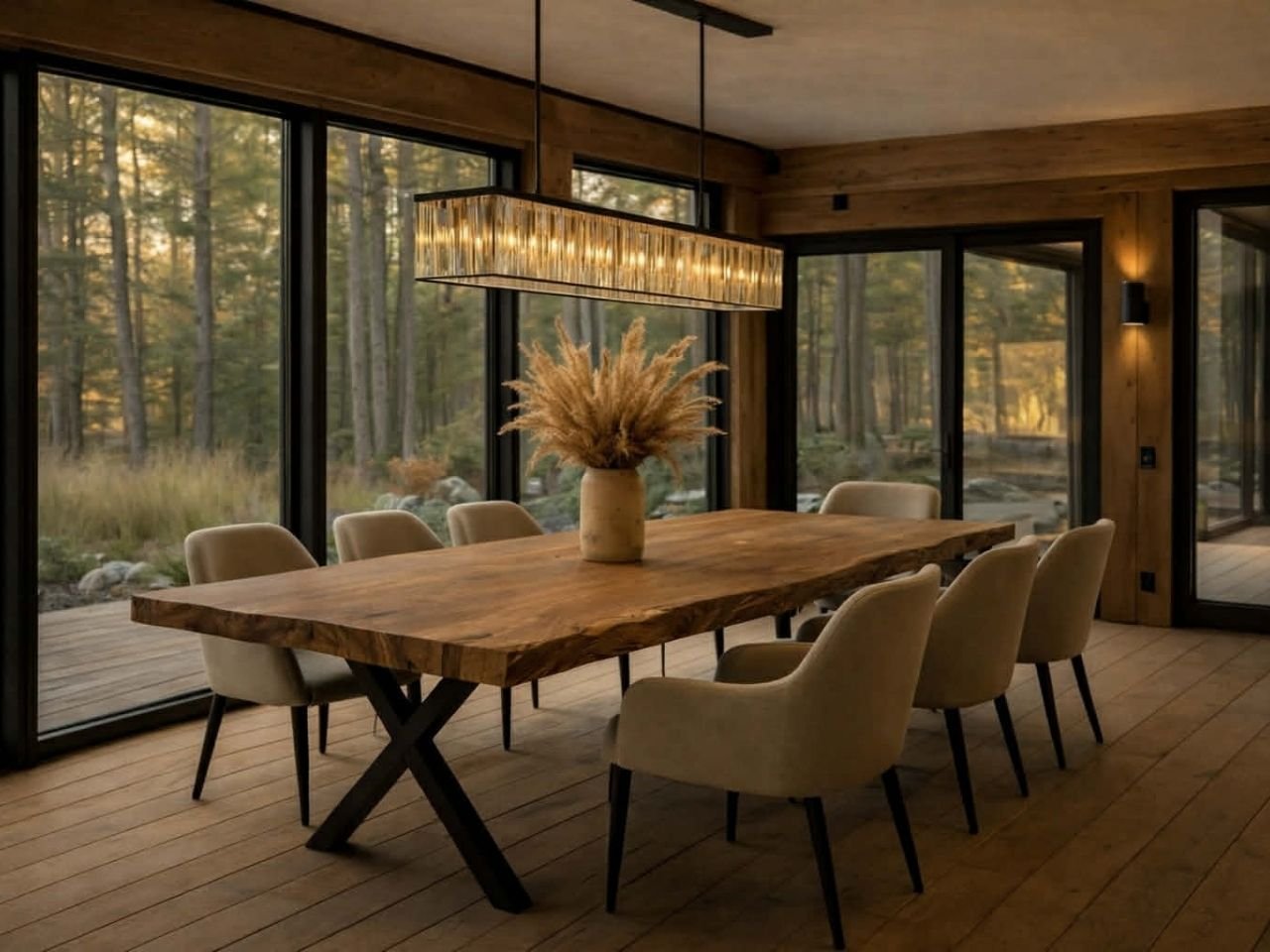
Friends sit down for dinner and, before the food arrives, someone runs a hand along the edge of the table and asks where it came from. That is the quiet magnetism of live edge wood. The curves, knots, and colour shifts tell a story about the tree long before anyone tells a story at the table.
This guide is for anyone in Greater Victoria drawn to the organic look of natural wood, whether you live in a West Coast modern home in Gordon Head, a character house in Fernwood, or a newer build on the Westshore. It explains what makes a live edge dining table in Victoria different from other wood tables, how to read the slab, and how to choose a size, base, and style that suit your home for years.
What Makes a Live Edge Dining Table Different
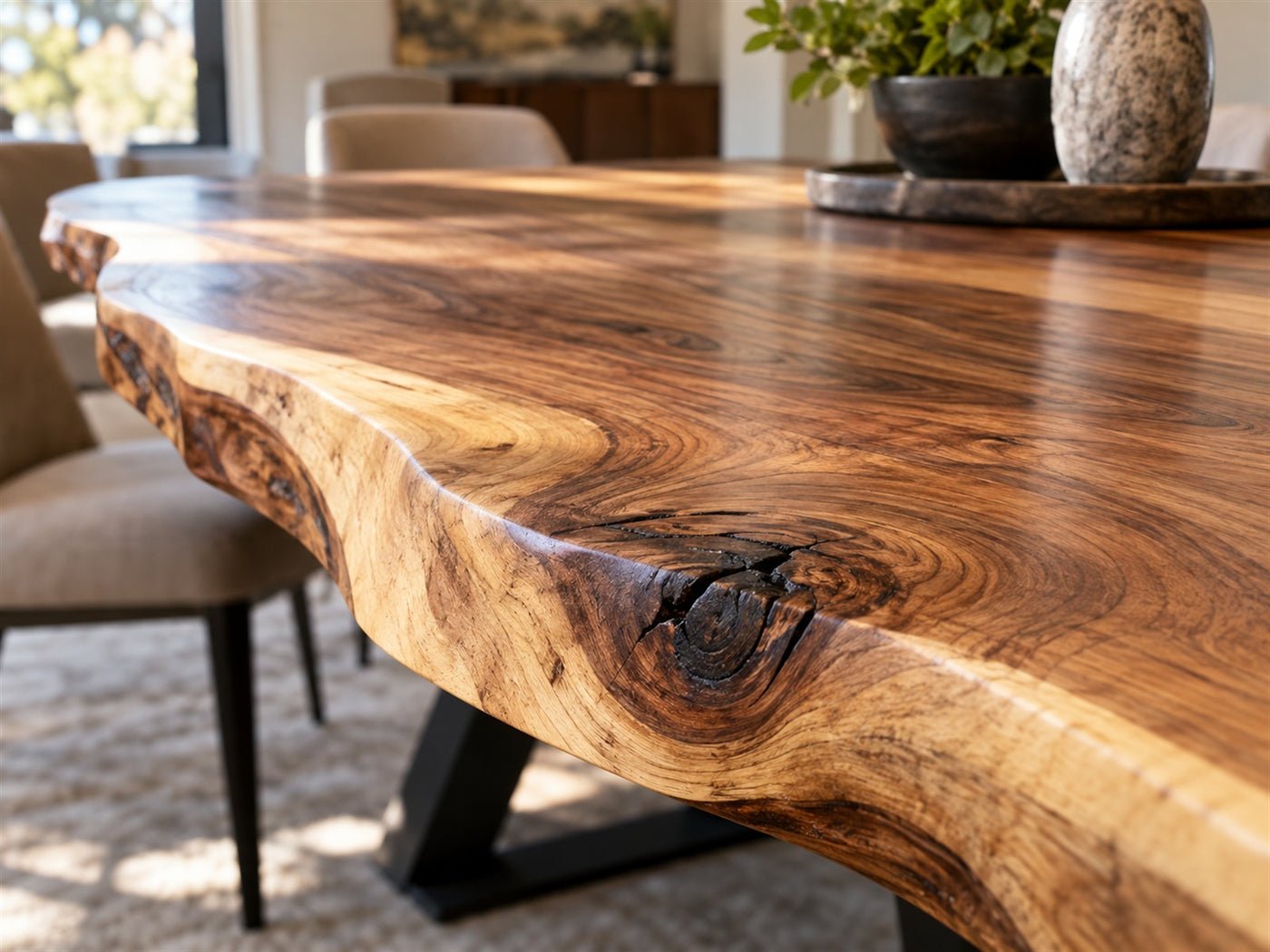
Most tables have straight, machined edges. A live edge table keeps the natural outer edge of the tree along one or both long sides of the top, so you see the contours the tree grew into. The top is cut from a single slab or from two or more boards joined side by side.
That natural edge brings a lot of character. You will notice knots where branches once grew, colour shifts between the darker heartwood and lighter sapwood, and swirling grain around those knots. No two slabs are alike, which is why a live edge top often becomes the piece people remember most about a room.
Why a Live Edge Dining Table in Victoria Feels at Home
Life on the island is shaped by forests, driftwood beaches, and big Douglas firs. Many local homes already bring that feeling indoors with exposed beams, stone, and natural textures. A live edge dining table in Victoria fits right into that style, since it carries the same organic lines you see on a walk through Thetis Lake or along the Juan de Fuca coast.
Character also makes a table feel personal. Small marks and scratches tend to blend into the grain instead of standing out, so a live edge top often looks better with age. For families who use the table for homework, puzzles, and long Sunday dinners, that forgiving surface is a real advantage.
Straight Edge or Curved Edge: Reading the Slab
Not every live edge looks the same. Some slabs have a gentle, straighter edge, so the table reads as a long, calm rectangle with an organic touch. Others have a dramatic curve that swells and narrows along the length, which makes the table a true statement piece.
A straighter edge is easier to seat evenly and suits more traditional rooms. A curved edge brings more drama but can leave one seat with less elbow room where the slab narrows. If you love a bold shape, plan your chairs around the widest sections and keep the narrowest part for the ends.
Wood Species and Their Personalities
Acacia is one of the most common live edge woods. It is dense and durable, with rich golden to deep brown tones and lively grain. Walnut brings deep chocolate colour and an elegant, refined look. Oak is strong and light to medium in tone, and mango is warm and attractive, though a little softer than oak.
Each species ages differently. Light woods may warm up with time and sunlight, while darker woods can soften slightly. Ask which wood a slab is cut from, since the species affects both the colour you see today and how the table will look in ten years.
Knots, Cracks, and Epoxy Fills: What to Expect
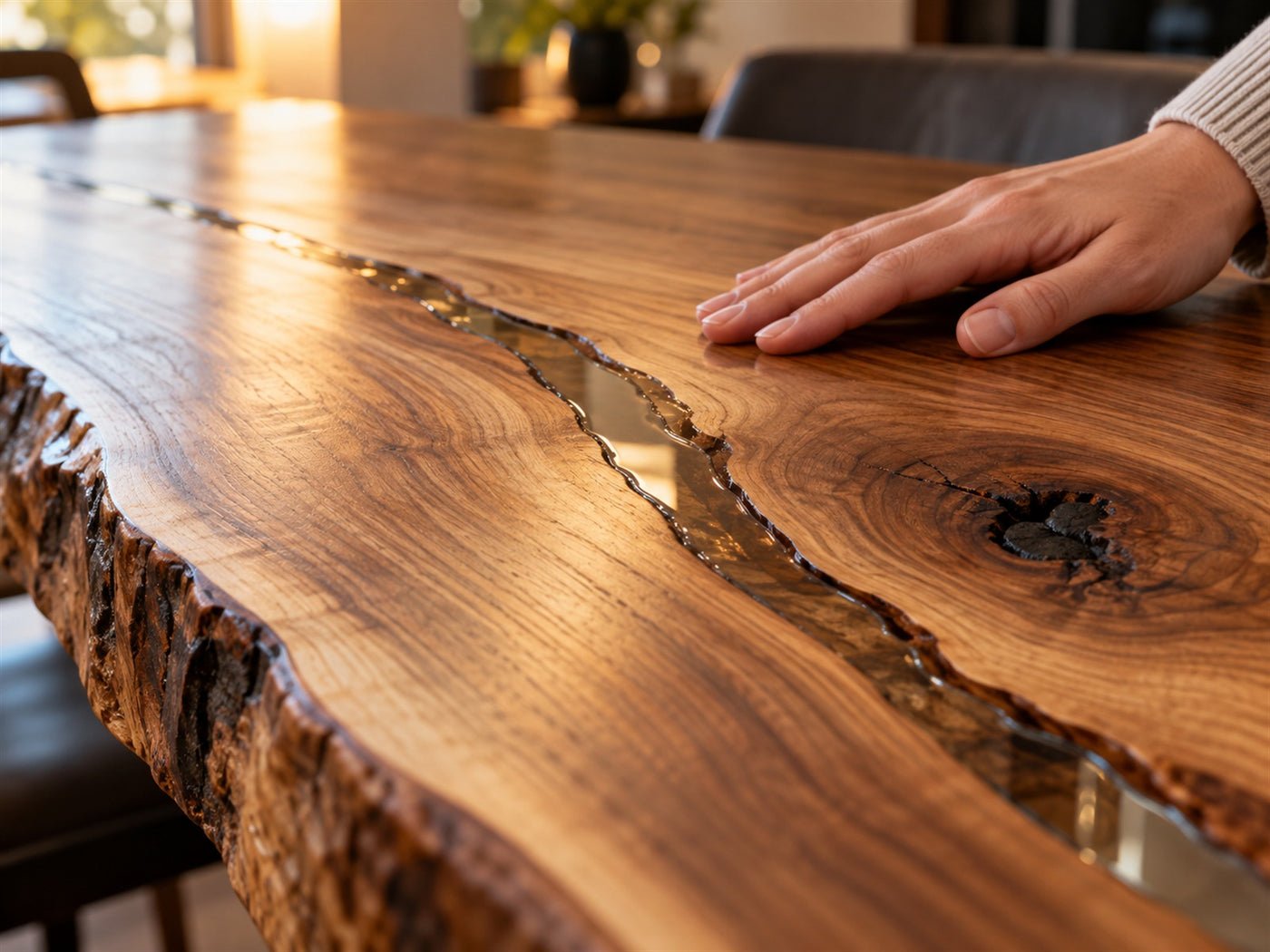
Natural features are part of live edge character. Small cracks, called checks, form as wood dries, and knots can leave small voids. On well-made tables, these are stabilized and often filled with clear or tinted epoxy so the surface is smooth and easy to clean.
A filled crack should feel flush under your hand, with no sharp edges or gaps that catch crumbs. Butterfly keys, small bow-tie shaped wood inlays across a crack, add strength and a handmade look. When you compare tables, run your hand along every fill, not just the middle of the top.
Bases That Frame the Slab
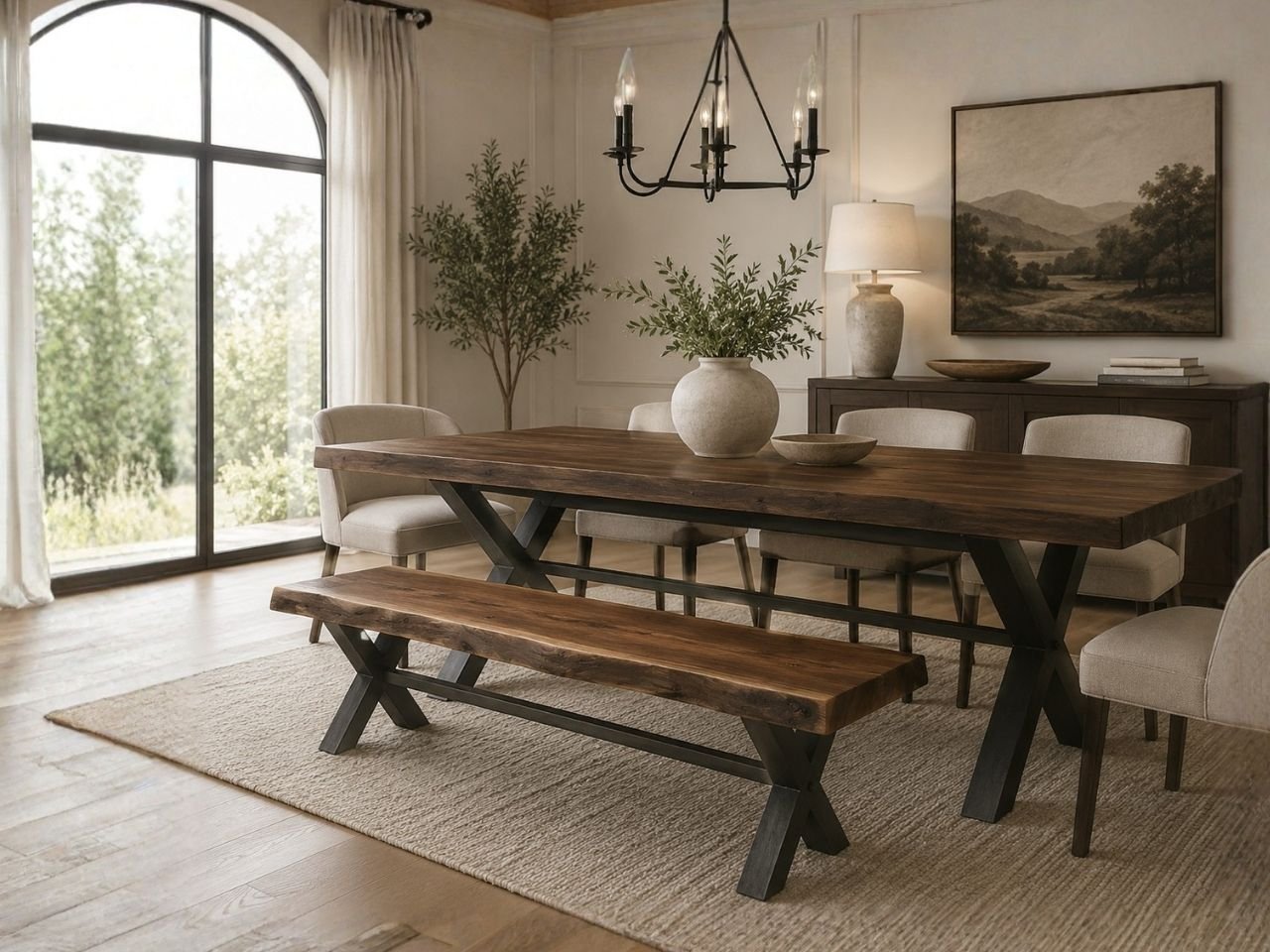
The base changes the whole look. Black X legs and steel trestles give a modern or industrial feel and let the slab float visually. A wood trestle base feels warmer and more rustic, and a pedestal frees up legroom along the sides.
Whatever you choose, check that the base is heavy and wide enough for the slab. Live edge tops are thick and weighty, and a stable base keeps the table from rocking when someone leans on one end. Leave enough space between the legs for chairs to slide in without bumping.
Sizing: Length, Width, and the Narrowest Point
Plan for about 24 inches of table length per guest for everyday meals, and closer to 30 inches if you like relaxed, roomy dinners. Leave about 36 inches between the table and walls or cabinets so chairs can pull out. Sizing a live edge dining table in Victoria follows the same rules you would use for any table.
Live edge adds one more step: measure the width at the narrowest point, not just the widest. A top that narrows to less than about 34 inches can feel tight for place settings on both sides. Slab thickness matters too. Most live edge tops are about 1.5 to 3 inches thick, and longer tables usually look and perform better with a thicker slab.
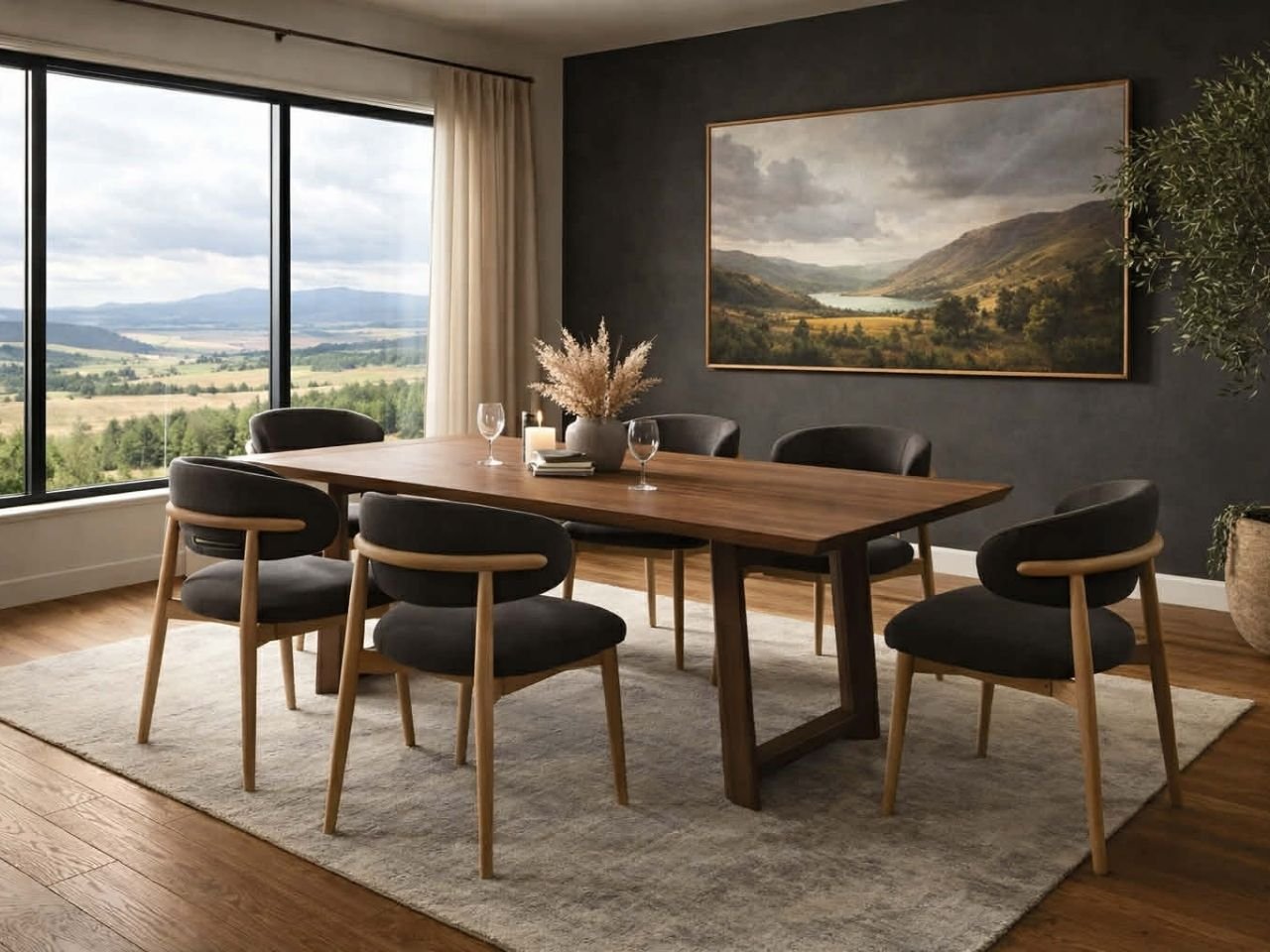
Live Edge or a Classic Solid Wood Dining Table in Victoria
If you love wood but want a calmer look, a classic plank top may suit you better. A solid wood dining table in Victoria with straight edges gives you the same warmth and repairability without the organic outline. It is often easier to match to existing furniture, and it seats guests evenly along both sides.
Some people also weigh a custom dining table in Victoria against a ready-made live edge piece. A custom build lets you pick exact sizes and finishes, while a ready-made slab lets you see the actual wood before you buy. Since every live edge slab is different, seeing it in person is worth a lot.
Chairs, Benches, and Matching Solid Wood Furniture in Victoria
A busy slab looks best with simpler chairs. Upholstered chairs in cream, oatmeal, or soft grey let the wood stand out, while leather chairs in cognac or tan bring warmth. A live edge bench on one side is a great choice for families, since it seats extra kids and echoes the table top.
You can carry the look into other rooms with solid wood furniture in Victoria, such as a sideboard, coffee table, or bench, but keep it balanced. One or two live edge pieces in a room feel special, while too many can compete for attention.
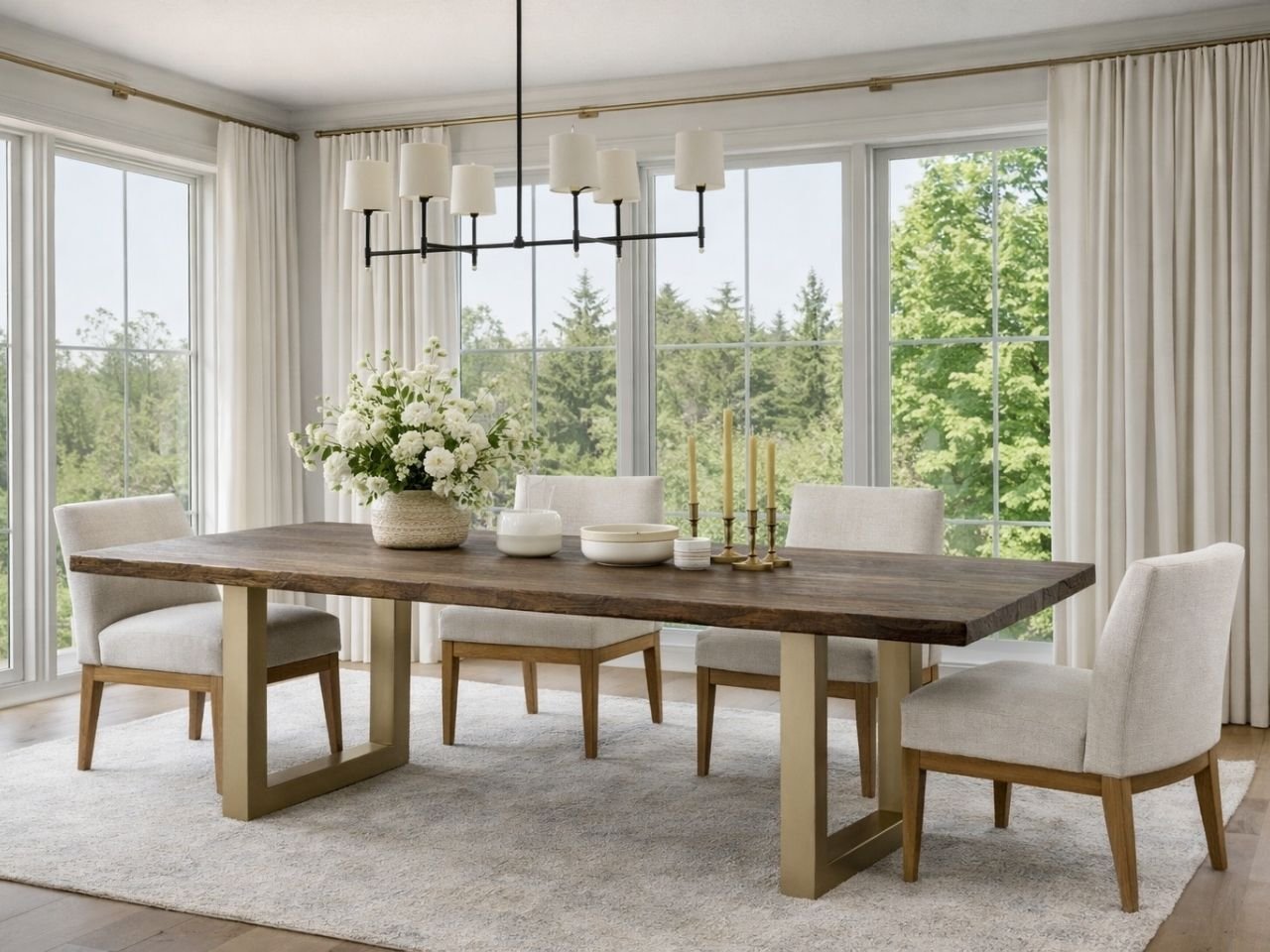
Find Your Live Edge Dining Table With Showhome Furniture
A live edge table is a piece you want to see in person. The colour, grain, and edge of each slab vary, and photos rarely show the full character. Ask our Langford showroom team about live edge tables and benches we can order in, and bring photos of your dining room so we can talk about wood tone and scale.
Book a free design consultation with your room measurements, the number of people you seat most nights, and any pieces you plan to keep. We will help you find a live edge dining table in Victoria that suits your space and the way your family gathers.
Good to know
Frequently Asked Questions
What is a live edge dining table?
It is a solid wood table that keeps the natural outer edge of the tree along one or both sides, so every top has its own shape, grain, and knots.
Are live edge tables good for families?
Yes. Small marks tend to blend into the grain, and a sealed finish makes daily cleanup easy.
What woods are common for live edge tables?
Acacia, walnut, oak, and mango are common. Each has its own colour, grain, and hardness.
How thick should a live edge top be?
Most are about 1.5 to 3 inches thick. Longer tables usually look and perform better with a thicker slab.
Are cracks in a live edge table normal?
Small stabilized checks and epoxy-filled cracks are a normal part of live edge character, as long as they feel smooth and flush.
How wide should a live edge table be?
Check the narrowest point. Around 34 inches or more leaves room for place settings on both sides.
What base works best for a live edge slab?
X legs, trestles, and pedestals all work. Choose a base that is heavy and wide enough to keep the slab stable.
What chairs pair well with a live edge table?
Simple upholstered or leather chairs let the slab stand out. A live edge bench is a practical choice for families.
Can you help me choose a live edge table?
Yes. Book a free design consultation and bring your room measurements and photos so we can help you compare options.
Where is Showhome Furniture located?
Our showroom is located in Langford and serves homeowners throughout Victoria and Vancouver Island, including Saanich, Colwood, and James Bay.