A showroom floor is designed to make everything look good. Lighting flatters fabric and finish, pieces are staged, and a sofa that will start sagging within two years can sit right next to one built to last a decade, with no visible difference to a shopper glancing across the room. Telling them apart takes knowing which details to look at.
This guide is for Victoria shoppers who want to judge the showroom furniture Victoria retailers carry by its construction rather than its appearance. It walks through the materials, joinery, and build details that separate a piece built for decades from one built to survive a return window.
Showroom Furniture Victoria: Why Looks Alone Do Not Predict Longevity
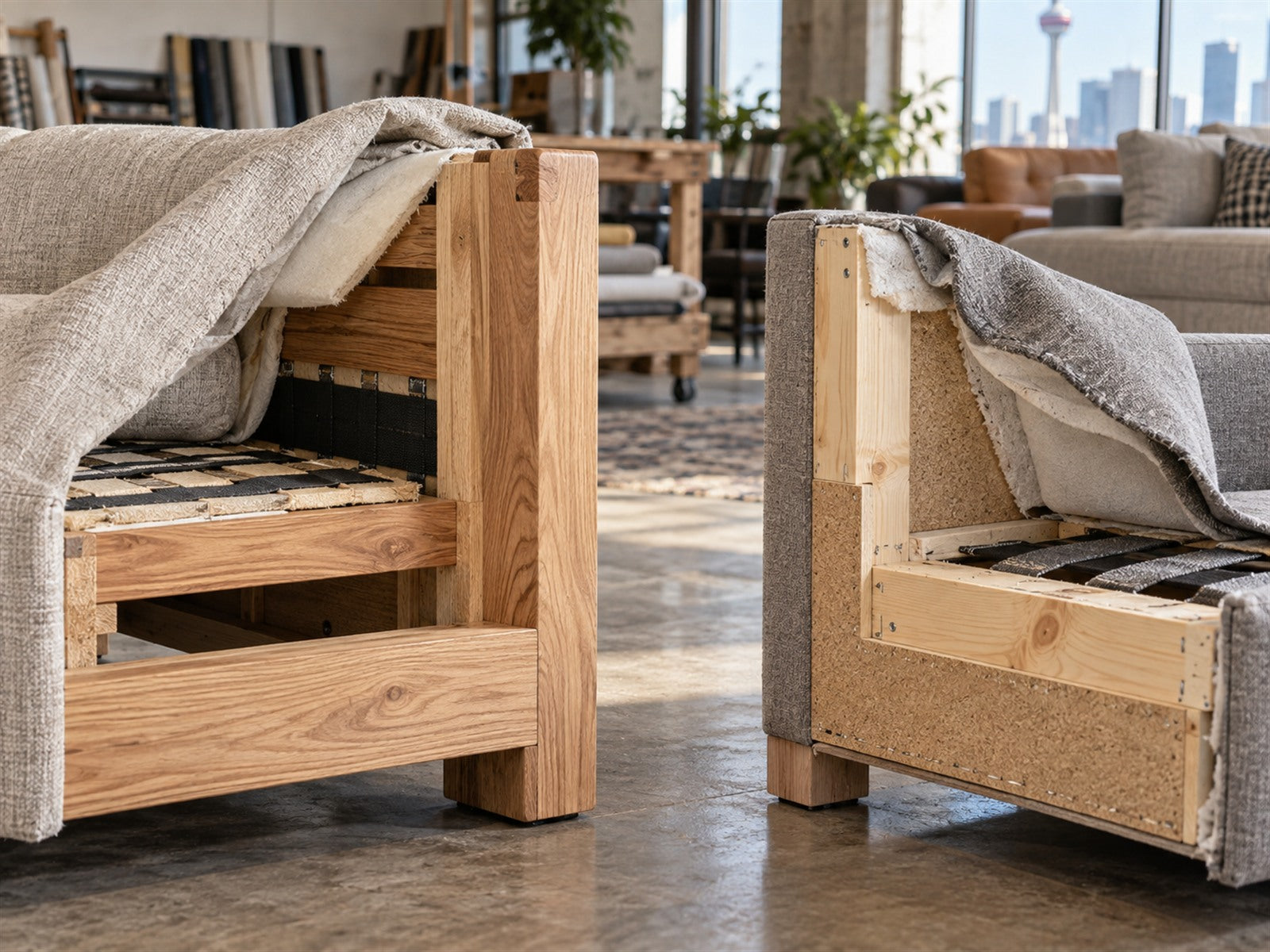
Manufacturers know a showroom is a visual sales environment, so the pieces that display well are not always the ones built to the highest standard underneath. A sofa with an attractive silhouette can hide a thin frame, and a dresser with a striking finish can be particleboard under a convincing veneer.
That is not a reason to distrust every showroom, but it is a reason to look past the first impression. Furniture construction quality lives in details most shoppers never check: what the frame is made from, how joints are assembled, what fills the cushions, and how the upholstery is attached. Knowing these in advance turns every furniture showroom Victoria shoppers walk into into a real evaluation rather than a guessing game.
Start With the Frame Material
The frame is the foundation of any upholstered piece, and it is the detail most hidden once fabric is stretched over it. Kiln-dried hardwood such as oak, maple, or birch holds its shape and resists warping far better than softwood or particleboard. That matters on Vancouver Island, where damp winters and drier summers make wood expand and contract through the year.
Ask directly what the frame is made from rather than guessing from weight or price. A knowledgeable associate should answer clearly. If a frame feels unusually light for its size, or nobody can answer the question, note it as you compare pieces.
Check How the Joints Are Assembled

Joinery is one of the clearest signs of furniture construction quality. On upholstered frames, joints that are glued, screwed, and corner-blocked hold up far better than joints held only by staples or nails. Corner blocks, small triangular supports glued and screwed into each frame corner, reinforce the whole structure.
On wood furniture, look at how drawers are joined. Dovetail joints, where interlocking pieces fit together without relying only on glue or nails, are a widely recognized mark of careful construction and tend to outlast butt joints or stapled corners. A drawer that already wobbles in the showroom is not one to trust for the next decade.
Understand What Is Inside the Cushions
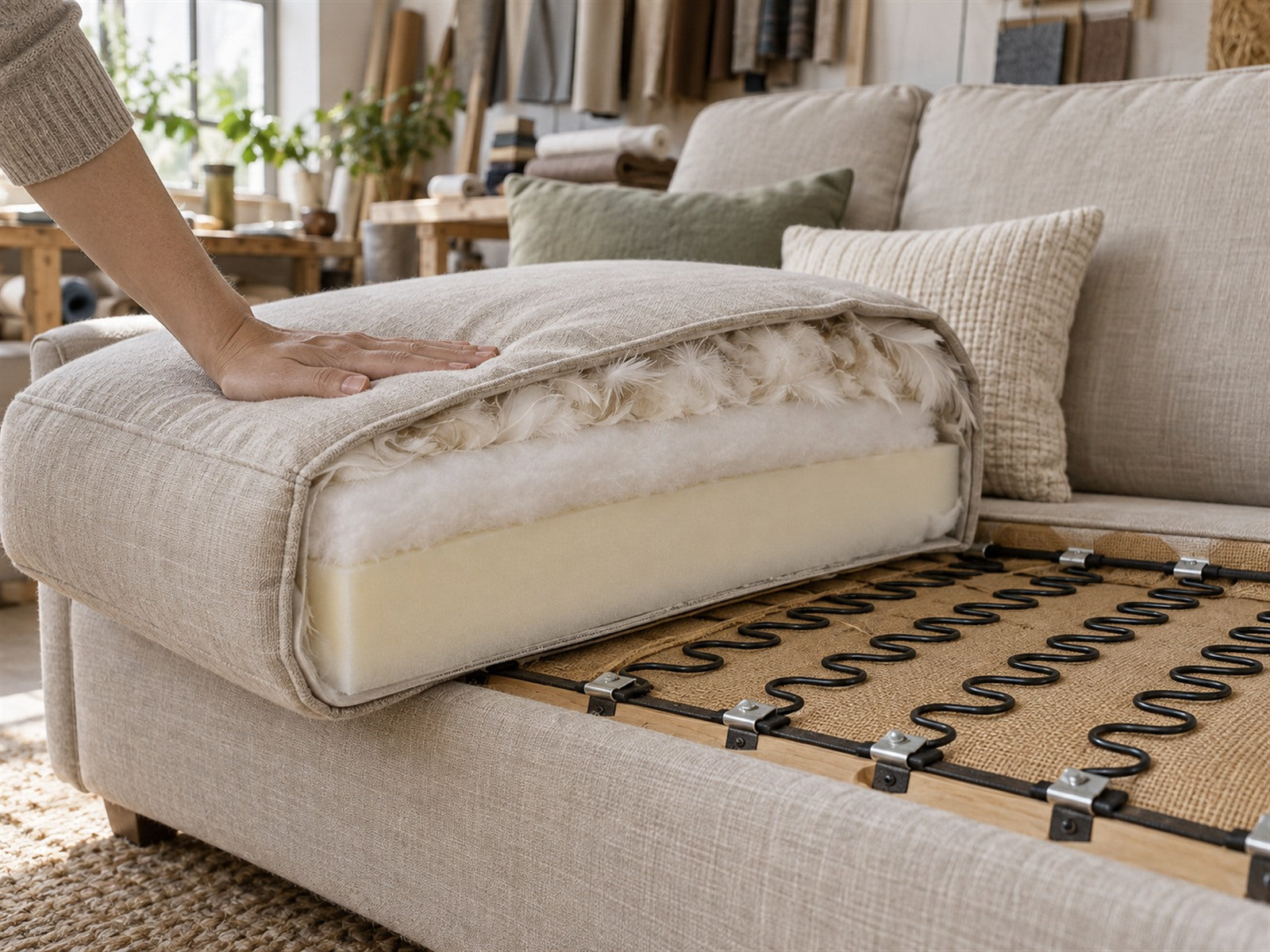
Cushion fill affects both comfort and how a piece ages, and it varies enormously even when the outside looks identical. High-density or high-resilience foam, sometimes wrapped in fibre or down for softness, holds its shape far longer than low-density foam, which can flatten within a year or two.
Ask about the support system under the cushions too. An eight-way hand-tied spring system or a sinuous spring base generally gives more durable, even support than webbing alone. Pressing firmly on a cushion and watching how quickly it recovers gives you a quick read on fill quality.
Look Closely at Upholstery and Stitching
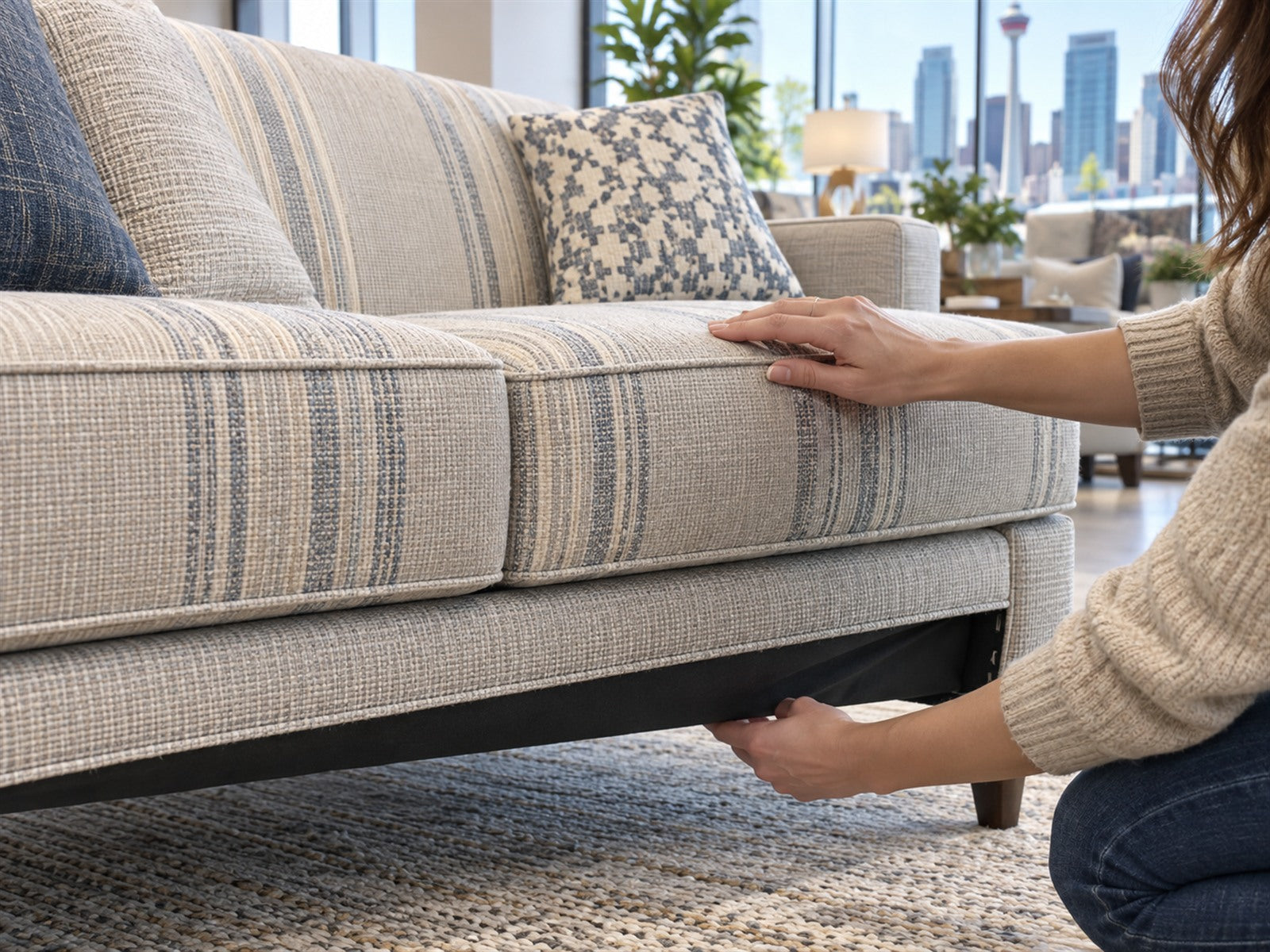
Upholstery details reveal how carefully a piece was assembled. Look for straight, even seams with no loose threads, fabric pulled taut without puckering, and patterns that line up across seams and cushions. Leather should feel consistent in texture across the whole piece, since inconsistent texture can point to lower-grade or bonded leather.
Check the back and underside too. Manufacturers who cut corners sometimes finish only the visible surfaces, and an unfinished underside says more about overall build quality than the front ever will.
Solid Wood Versus Veneer, and Why It Matters
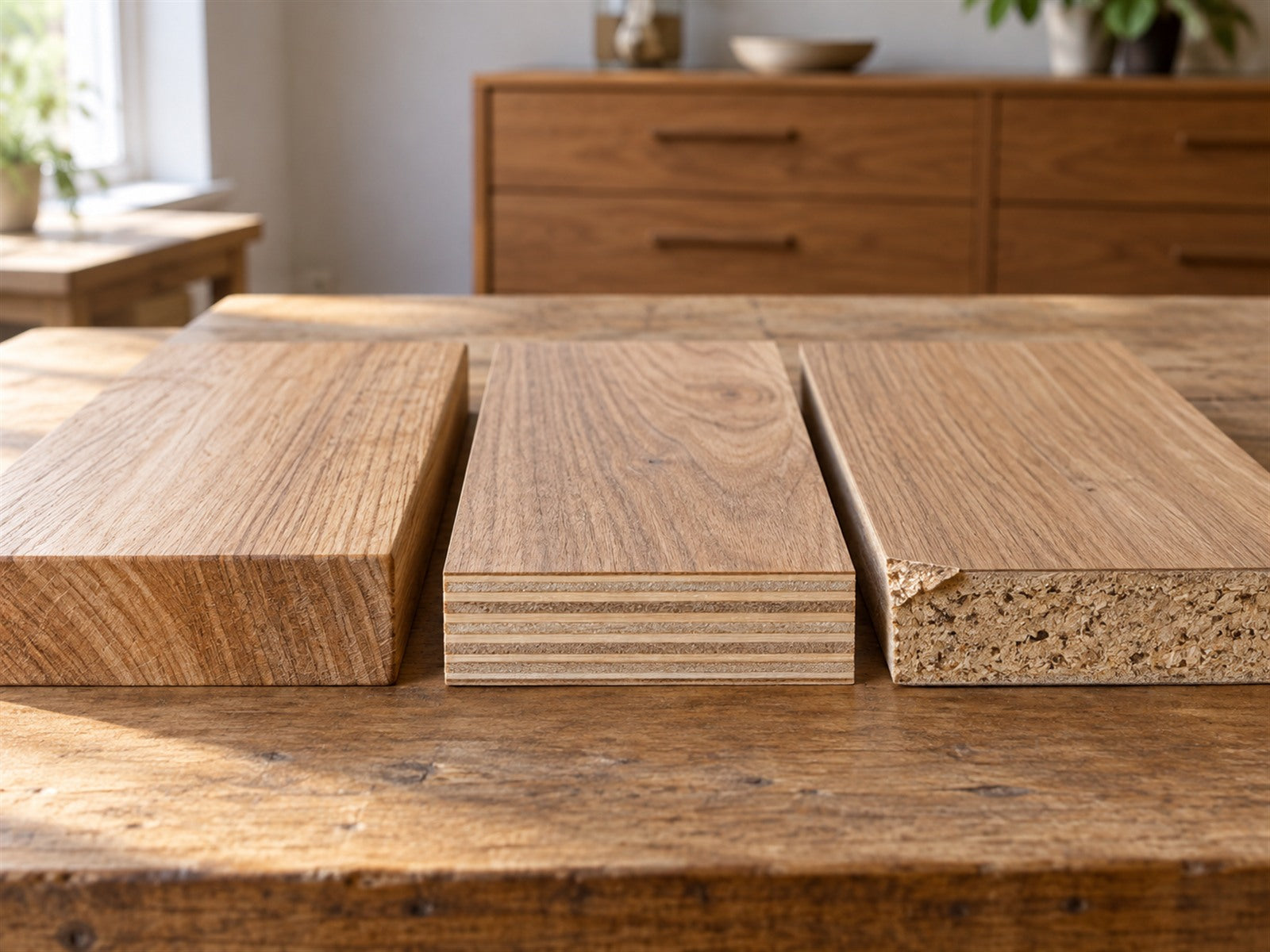
Solid wood and veneer both have a place in well-made furniture, and veneer is not automatically lower quality when it is applied over solid wood or good plywood. The concern is veneer over particleboard or MDF, which is more prone to chipping, swelling, or peeling over time, particularly in a humid coastal climate like Victoria's.
Ask whether a piece is solid wood, veneer over solid wood or plywood, or veneer over particleboard. Checking an edge or the underside, where the material is easier to see, helps confirm what you are looking at.
How to Judge a Dining Table and Chairs
A dining table takes more daily wear than almost any other piece, from homework and hot dishes to holiday dinners that run late. Start with the top. A solid wood top can be sanded and refinished if it is damaged, while a thin veneer over particleboard cannot. Well-matched grain across the planks is a sign of care in the building process.
Then check what holds it together. Legs joined to the apron with mortise-and-tenon joints or reinforced with corner blocks stay solid for decades, while legs that simply screw into the top tend to loosen. For chairs, look for stretchers between the legs and firm joints where the seat meets the frame, then sit and shift your weight. A chair that creaks in the showroom will only get louder at home.
Judging Quality in Custom Furniture Before It Is Built
Custom furniture adds a challenge, since the exact piece does not exist yet. Instead, you judge the process and the samples. Ask to see the frame and cushion construction used for the custom line, handle the actual fabric or leather swatches, and look at finish samples in daylight. Every choice, from wood species to finish, affects how the piece will age.
Customization commonly covers sofas, sectionals, beds, and some dining pieces, though every store draws the line differently. Canadian-made furniture often benefits from closer quality control, which is worth asking about. A good custom process should leave you with a clear picture of what you are getting.
Preparing for a Victoria Showroom Visit

Moving into a new place is one of the most common reasons people start shopping, and a little preparation makes every Victoria showroom visit more productive. Measure each room, plus the doorways, hallways, stairwells, and condo elevators a large piece has to pass through. Take photos of each space so you can show staff exactly what you are working with.
Plan to spend at least an hour. That gives you time to compare pieces side by side, test comfort in the positions you sit in day to day, and talk through your preferences and budget. Ask how delivery scheduling works and whether assembly is included before you buy, so you are ready on move-in day. A well-planned Victoria showroom visit is how a new place starts to feel like home.
A Quick Furniture Quality Checklist for Your Next Visit
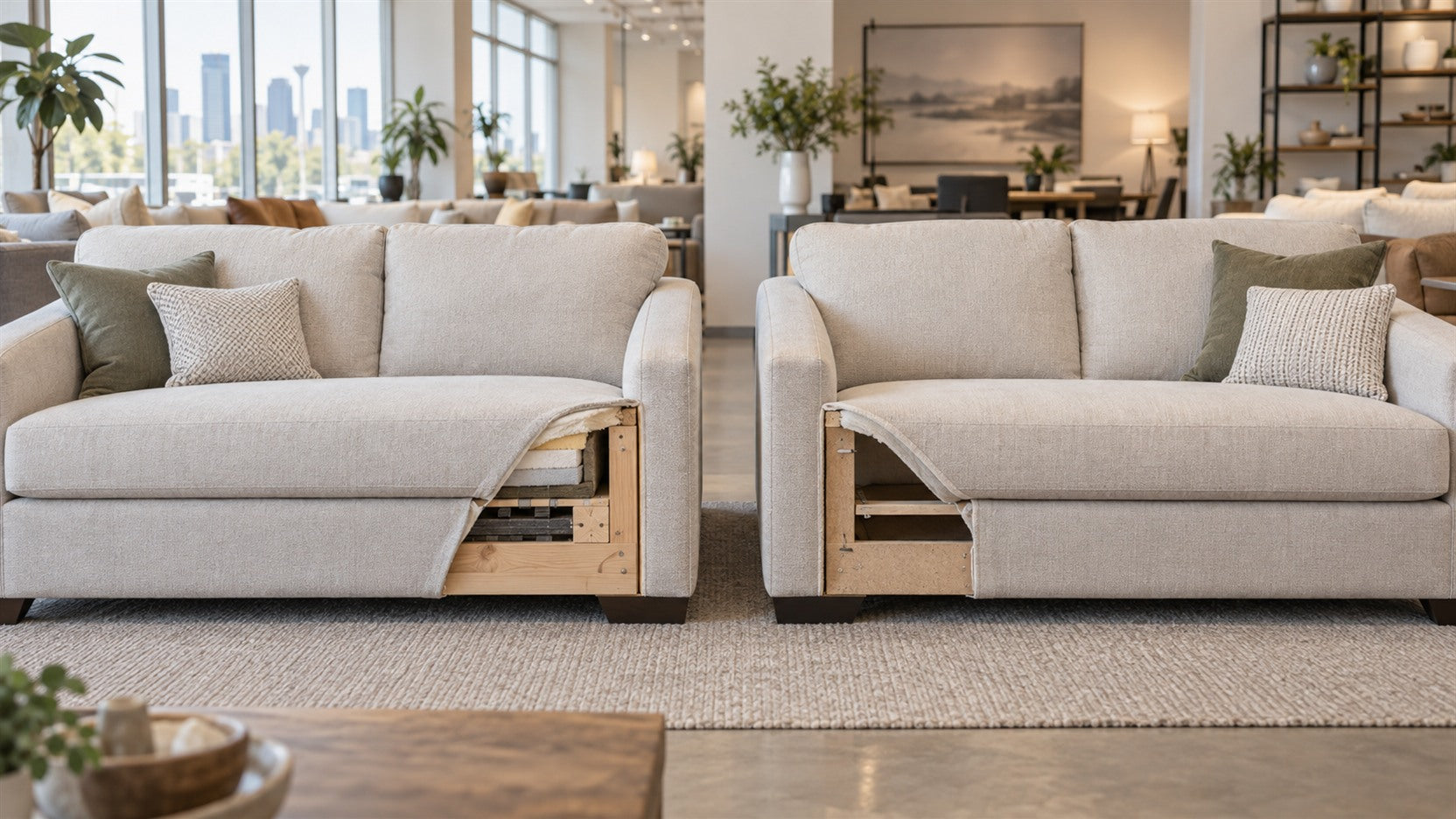
A short furniture quality checklist keeps a visit focused. Ask whether the frame is kiln-dried hardwood, check how drawers and joints are assembled, ask about cushion fill density and the support system underneath, examine seams including the back and underside, and confirm whether a wood piece is solid, veneer over solid wood, or veneer over particleboard.
None of these checks takes more than a minute or two, but together this furniture quality checklist gives you a much clearer picture of how the showroom furniture Victoria shoppers are considering will hold up, rather than judging by appearance or price alone.
What Good Furniture Stores Do After the Sale
Construction tells you how a piece is built, but the store behind it decides what happens if something goes wrong. Good stores explain their return or exchange policy before you buy. A warranty covering frames and mechanisms signals that the manufacturer trusts its own work, so ask what it covers and how to register it once the piece arrives.
Reviews that mention on-time delivery and helpful follow-up tell you more than reviews about the showroom alone. A well-made sofa bought from a store that will not stand behind it can still leave you with a problem you did not create, so weigh service alongside the showroom furniture Victoria stores put on the floor.
How Showhome Furniture Builds for the Long Run
At our furniture showroom Victoria shoppers can visit in Langford, our team can speak directly to frame material, joinery, and cushion construction on anything on the floor. Many of the pieces we carry are Canadian-made, and we are upfront about what each piece is built from, not just how it looks. Our customizable sofas, sectionals, and beds let you see and feel the construction behind a custom order before you commit.
If you are trying to judge furniture construction quality before you buy, book a free design consultation and let our team walk you through the details that matter most.
Good to know
Frequently Asked Questions
What is the most important construction detail on upholstered furniture?
Frame material and joinery matter most. Kiln-dried hardwood with glued, screwed, and corner-blocked joints will outlast a softwood or stapled frame by years, even if both look similar on the floor.
How can I tell if a sofa cushion will hold its shape?
Press down firmly and watch how quickly it recovers. High-density foam over a hand-tied or sinuous spring system tends to hold its shape much longer than low-density foam alone.
What is a dovetail joint and why does it matter?
A dovetail joint is an interlocking wood joint used in drawers and cabinets that does not rely only on glue or nails. It is widely regarded as a sign of durable construction.
Is veneer furniture lower quality than solid wood?
Not necessarily. Veneer over solid wood or quality plywood can perform very well. The concern is veneer over particleboard, which is more prone to chipping or swelling, especially in humid conditions.
How can I check the quality of leather furniture?
Feel the leather across the whole piece for consistent texture. Inconsistent feel from section to section can point to lower-grade or bonded leather.
Why check the back or underside of furniture?
Some manufacturers finish only the visible surfaces, so the back or underside can reveal unfinished fabric or weaker construction the front does not show.
Does a higher price always mean better construction?
Not automatically. Price does not always track construction quality, which is why checking frame material and joinery matters more than price alone.
Why does Victoria's climate matter for furniture quality?
Coastal humidity and seasonal swings make wood expand and contract. Kiln-dried frames, solid joinery, and quality veneer substrates handle those changes far better.
What should be on my furniture quality checklist?
Frame material, joinery, cushion fill and support, stitching including the underside, and whether wood pieces are solid or veneer, and over what core.
Where is Showhome Furniture located?
Our showroom is located in Langford and serves homeowners throughout Victoria and Vancouver Island, including Saanich, Colwood, and James Bay.