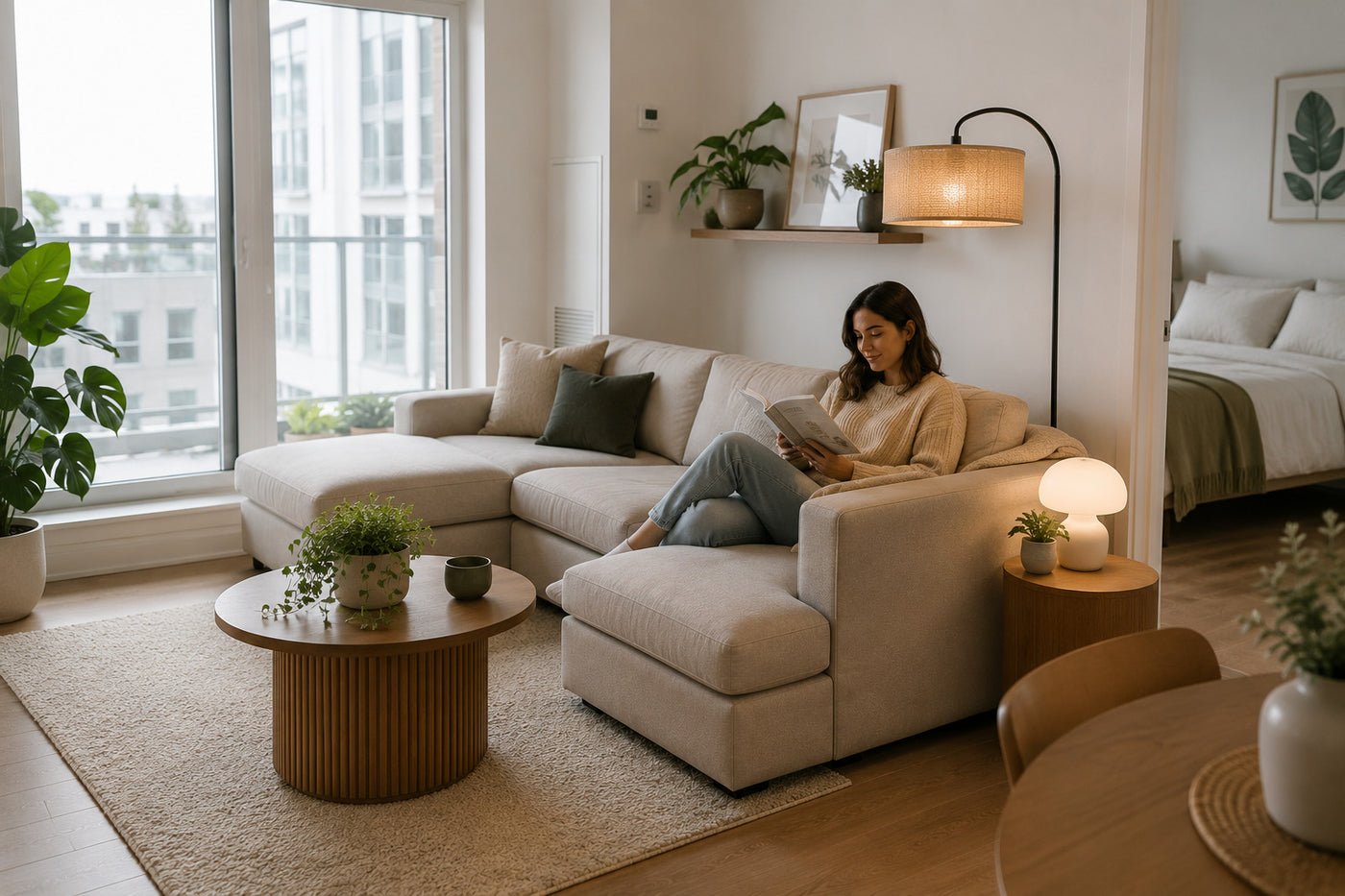
You unroll the new rug, step back, and something looks off. The sofa sits on the floor behind it, the coffee table floats in the middle, and the whole room suddenly feels smaller. Nine times out of ten, the problem is not the colour or pattern. It is the size.
Getting the size right is the single biggest step in choosing a rug. This guide is for anyone shopping for Victoria area rugs who wants each room to feel balanced and finished. It covers standard sizes, simple measuring steps, and clear rules for living rooms, bedrooms, dining rooms, hallways, and open-concept spaces, so you can choose with confidence before you buy.
Standard Sizes for Victoria Area Rugs
Most rugs come in a handful of standard sizes, which makes planning easier. Small rugs of 2 by 3 and 3 by 5 feet suit doorways, kitchen sinks, and bathrooms. A 4 by 6 works beside a bed or in a reading corner. Medium rugs of 5 by 8 and 6 by 9 suit smaller living rooms, offices, and kids' rooms.
Large rugs of 8 by 10 and 9 by 12 are the most common sizes for living rooms, bedrooms, and dining rooms, and most Victoria area rugs in main rooms fall in this range. Extra-large rugs of 10 by 14 or larger work in great rooms and big open-concept spaces.
Measure Before You Shop
Start by measuring the length and width of the room. Then measure the furniture group the rug needs to anchor, such as the sofa, chairs, and coffee table, or the bed and nightstands. A good general rule is to leave about 12 to 24 inches of bare floor between the rug and the walls.
Mark the rug size on the floor with painter's tape and live with it for a day or two. Walk around it, sit on the sofa, and see how it feels. This simple step catches most sizing mistakes before they happen.
Living Rooms: Size the Rug Around Your Sofa or Sectional
There are three common ways to place a living room rug. In an all-legs-on layout, every piece sits fully on the rug, with about 6 to 12 inches of rug showing beyond the furniture. This feels the most luxurious and suits larger rooms. In a front-legs-on layout, the front legs of the sofa and chairs sit on the rug, which works in most rooms. In a floating layout, only the coffee table sits on the rug, which suits very small spaces.
Your sofa is the best starting point. The rug should be at least 6 to 8 inches wider than the sofa on each side, so the sofa looks anchored rather than perched on the edge. For a sectional, choose large area rugs in Victoria homes that reach under the front legs of both sides of the L.
Bedrooms: Twin, Queen, and King
In a bedroom, the rug should reach far enough past the sides and foot of the bed that your feet land on it when you get up. Aim for about 18 to 24 inches of rug on each side and at the foot of the bed. Most people place the rug about a third of the way under the bed, starting just in front of the nightstands.
As a general guide, a 5 by 8 suits a twin bed, an 8 by 10 suits a queen, and a 9 by 12 suits a king. If you prefer smaller rugs, a pair of runners on each side of the bed is another option.
Dining Rooms: Leave Room to Pull Out the Chairs
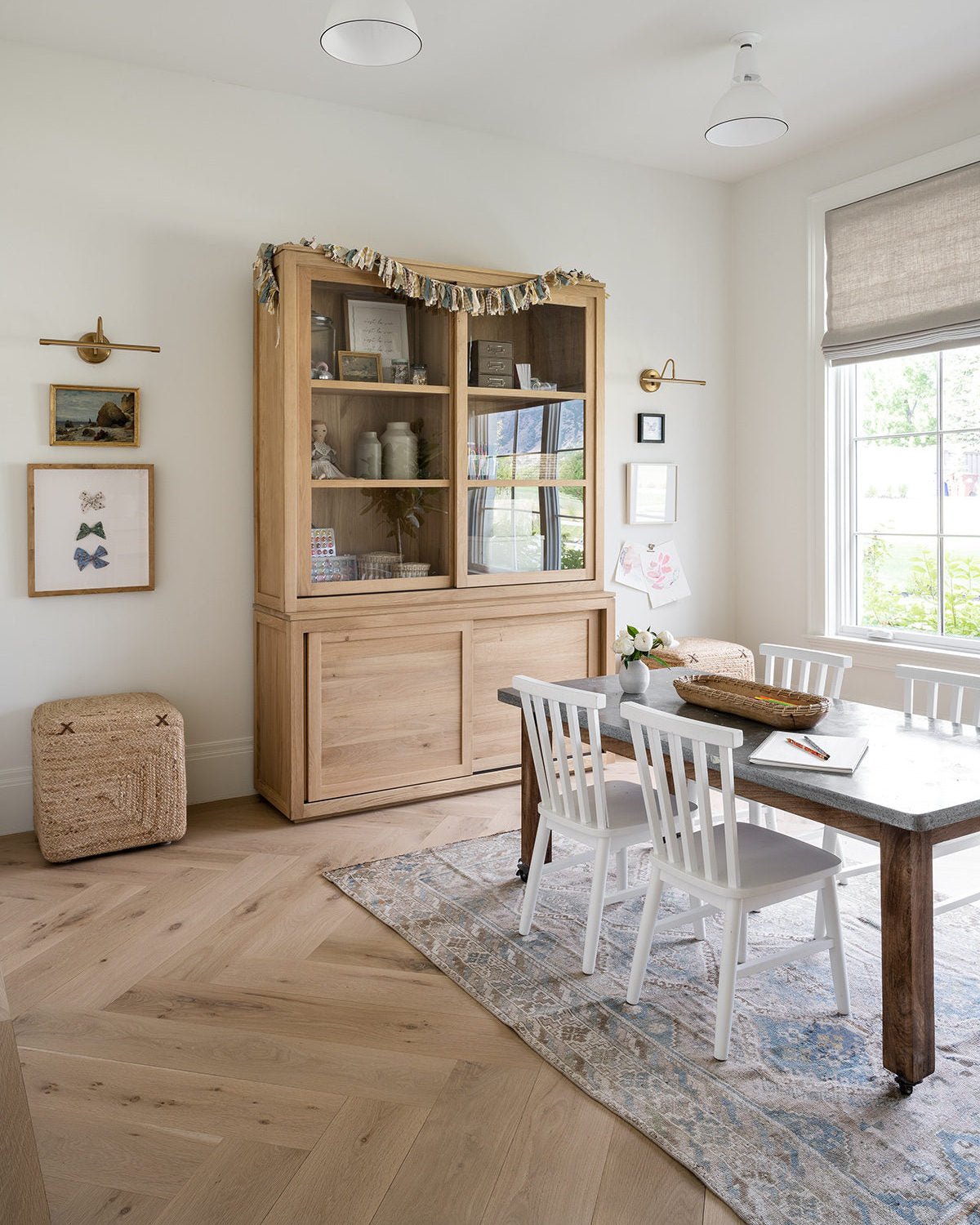
Dining rugs follow one key rule: the chairs should stay fully on the rug when they are pulled out. Aim for at least 24 inches of rug beyond every edge of the table, and up to 30 or 36 inches in larger rooms.
For a table seating four, a 6 by 9 or 8 by 10 usually works. A table for six usually needs an 8 by 10, and a table for eight often needs a 9 by 12. Match the rug shape to the table, so a round table sits on a round rug and a rectangular table on a rectangular rug.
Round Rugs, Kitchens, and Hallway Runners
A round rug about 4 feet wider than a round table usually leaves enough room for chairs. Round rugs also soften reading corners, nurseries, and spaces with a curved sofa or nest chair.
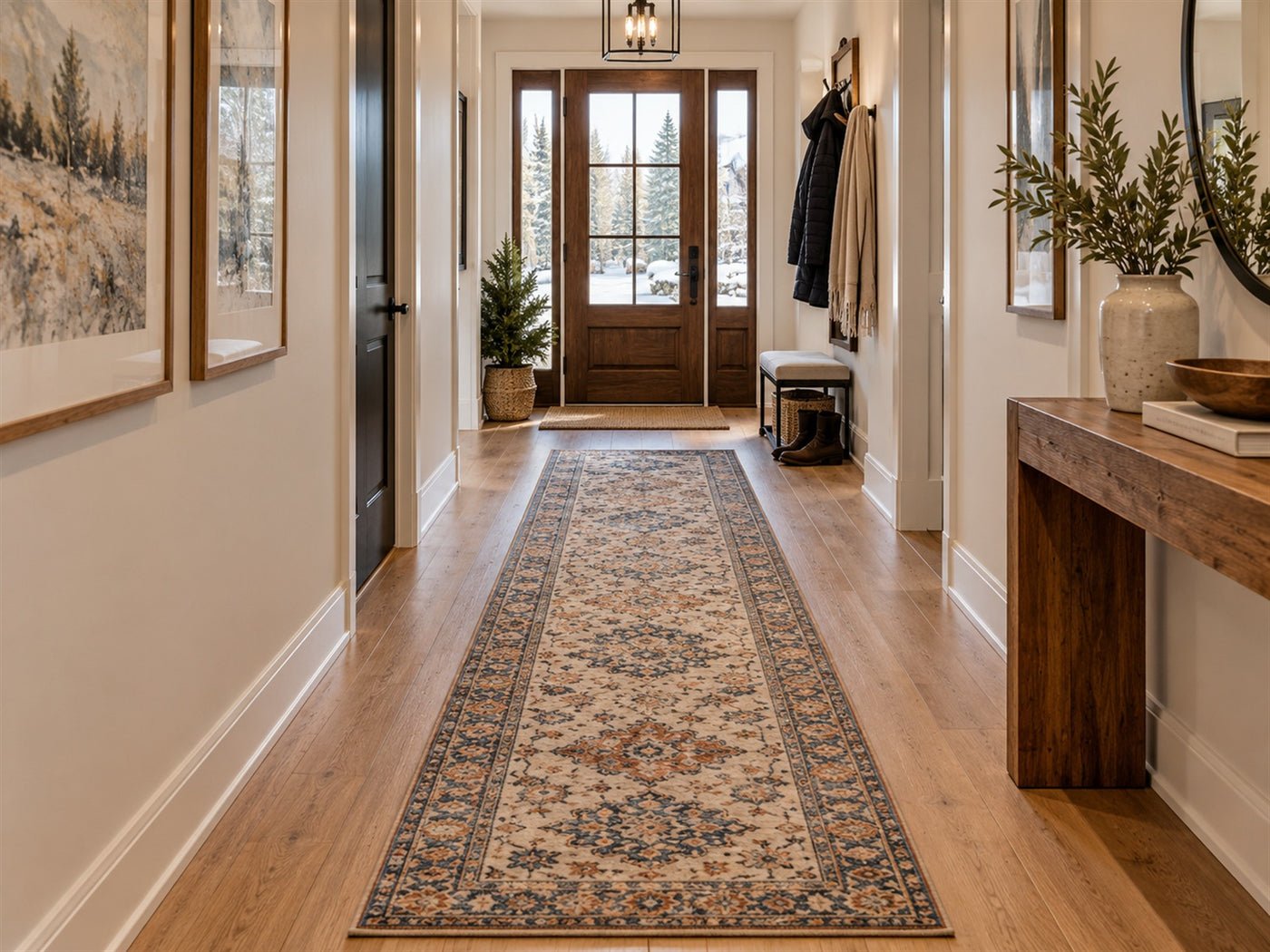
In kitchens, a 2 by 3 rug or a 2 by 6 runner works in front of the sink. In hallways, leave about 4 to 6 inches of floor on each side of the runner and around 6 to 12 inches at each end, so it looks centred. Measure doors too, since a thick runner can catch the bottom of an inward-swinging door.
Open-Concept Rooms: Use Large Area Rugs in Victoria to Define Zones
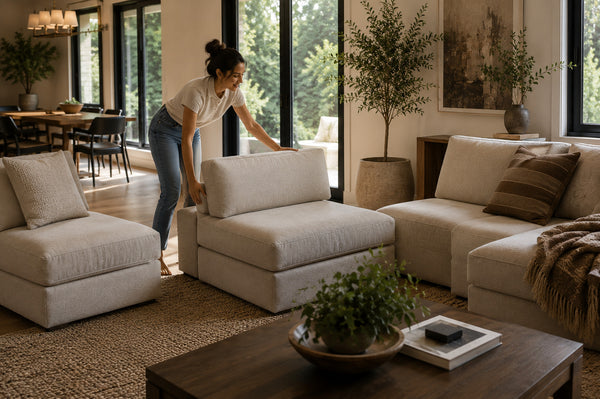
Many newer homes in Langford, Colwood, and on the Westshore have open layouts where the kitchen, dining, and living areas share one space. Rugs help separate those zones without walls. Use one rug to anchor the seating area and another under the dining table.
Keep at least 2 to 3 feet of open floor between zones, so the room does not feel cluttered. The rugs do not have to match, but they should share a colour or texture so the whole space feels connected.
Too Small or Too Large: How to Fix It
A rug that is too small makes furniture look like it is floating and the room look smaller. If you already have one, layer it over a larger, flat jute or sisal rug to extend its reach. A rug that is too large can make a room feel crowded and leave no frame of bare floor. If that happens, move it to a bigger room or trim the furniture layout around it.
When in doubt with Victoria area rugs, go bigger. In most living rooms, a rug one size larger than you first think usually looks better.
Shopping Rug Stores in Victoria With Your Measurements
Bring your room measurements, your sofa or bed size, and a photo of the space when you visit rug stores in Victoria. It helps to know whether you want an all-legs-on or front-legs-on layout before you start, so you can narrow down sizes quickly.
Shopping rugs for sale in Victoria online? Then check the exact dimensions rather than relying on a size label, since some rugs run a few inches smaller than their listed size. Ask about rug pads too, which should sit about an inch inside the rug's edge.
Plan Your Seating and Rug Size With Showhome Furniture
Rug size always starts with the seating. In Langford, our designers can match a sofa or sectional to your room's proportions, then work out how big the rug under it should be.
Sketch the room with its measurements, snap a photo, then book a free design consultation. Together we can map out seating, spacing, and Victoria area rugs so each room feels balanced.
Good to know
Frequently Asked Questions
What size rug do I need for my living room?
Most living rooms suit an 8 by 10 or 9 by 12 rug that sits under at least the front legs of the sofa and chairs.
How much floor should show around a rug?
Leave about 12 to 24 inches of bare floor between the rug and the walls.
How wide should a rug be compared to a sofa?
At least 6 to 8 inches wider than the sofa on each side.
What size rug goes under a queen bed?
An 8 by 10 usually works, extending about 18 to 24 inches past the sides and foot of the bed.
How big should a dining room rug be?
At least 24 inches beyond every edge of the table, so chairs stay on the rug when pulled out.
What size round rug fits a round table?
A round rug about 4 feet wider than the table usually leaves room for the chairs.
How do I size a hallway runner?
Leave about 4 to 6 inches of floor on each side and 6 to 12 inches at each end.
Can I use more than one rug in an open room?
Yes. Use separate rugs to define seating and dining zones, with 2 to 3 feet of floor between them.
Can you help me plan a rug size?
Yes. Book a free design consultation and our team can plan your seating and rug layout together.
Where is Showhome Furniture located?
Our showroom is located in Langford and serves homeowners throughout Victoria and Vancouver Island, including Saanich, Colwood, and James Bay.