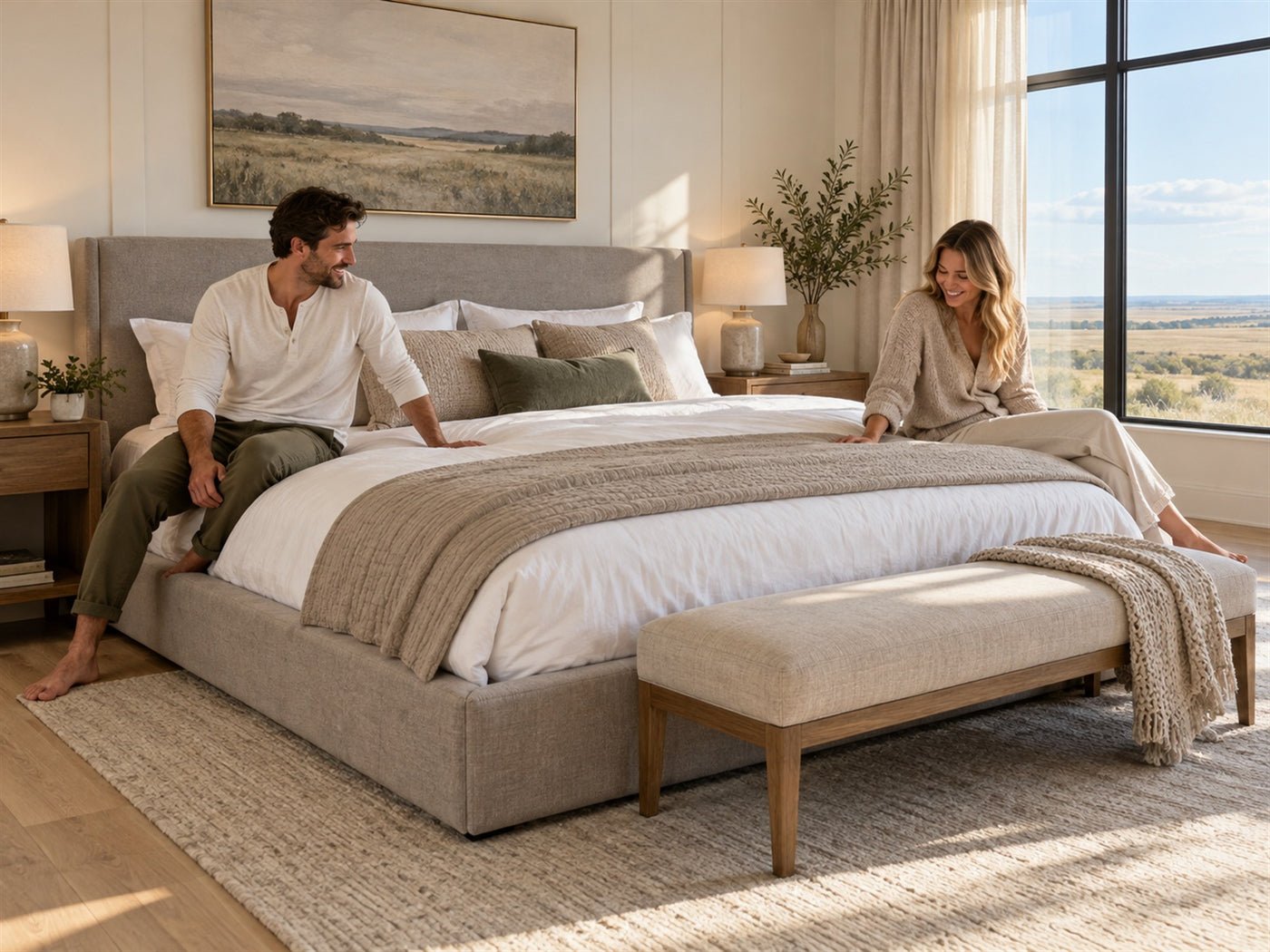
You sit on the edge of the bed to pull on your socks, and either your feet rest flat and your knees bend comfortably, or you perch awkwardly, toes reaching for the floor. It is a small moment, but it happens twice a day, every day, for as long as you own the bed.
Height and support are the two things most people overlook when choosing a bed frame, and they shape how the bed feels for years. This guide is for anyone comparing Victoria bed frames who wants a bed that is easy to get in and out of, quiet, and solid underneath. It covers how to find your ideal height, how mattress thickness changes the math, and what good support looks like for queen and king beds.
Why Bed Height Matters More Than Most Shoppers Expect
A bed that is too low makes your knees and hips work harder every time you stand up. A bed that is too high can leave your feet dangling and make getting in feel like a climb. The right height lets you sit on the edge with your feet flat and your knees at about a right angle.
Height also matters for older family members, anyone recovering from an injury, and parents lifting children in and out. Getting it right makes mornings easier for everyone.

Find Your Ideal Height With the Knee Test
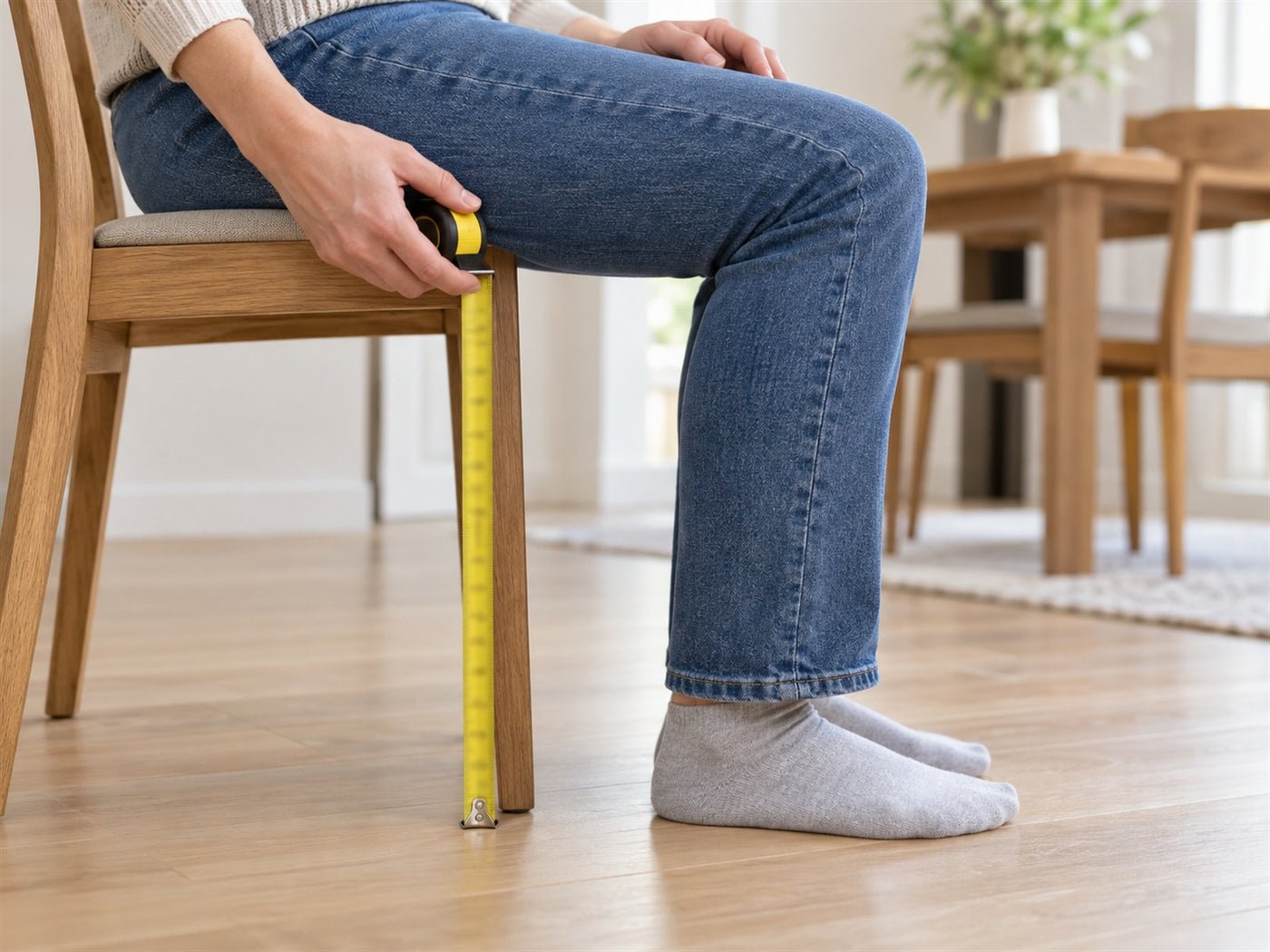
The simplest way to find your ideal height takes about a minute. Sit on a dining chair where your feet rest flat on the floor and your knees bend at about a right angle. Measure from the floor to the back of your knee. That number is close to the ideal finished height of your bed, including the mattress.
For many adults, it lands somewhere around 20 to 25 inches. If two people share the bed and their numbers differ, aim for the middle, or lean toward the person who has more trouble getting up.
Do the Math: Frame, Foundation, and Mattress
The finished height of your bed is the frame's deck height, plus any foundation or box spring, plus the mattress. Mattresses today range from slim foam models to thick hybrids, so the same frame can feel very different depending on what goes on it.
Before you choose a frame, know your mattress thickness. If you have a tall hybrid mattress, a lower frame or platform may give you the right finished height without a foundation. If your mattress is slim, a taller frame or a foundation can bring it up to the right level.
Low, Standard, or Tall: Matching Victoria Bed Frames to Your Room
Low frames feel modern and make a small room or a room with a sloped ceiling feel more open, which suits many upper-floor rooms in Victoria character homes. Standard heights work for most adults. Taller frames leave space for storage bins underneath and can be easier to get out of for taller people.
Headboard height matters too. Many of our custom beds come with a choice of headboard height, such as 53 inches or 68 inches on some styles. A taller headboard makes a strong statement in a room with high ceilings, while a lower one suits sloped ceilings or rooms with windows above the bed.
What Good Support Looks Like Underneath
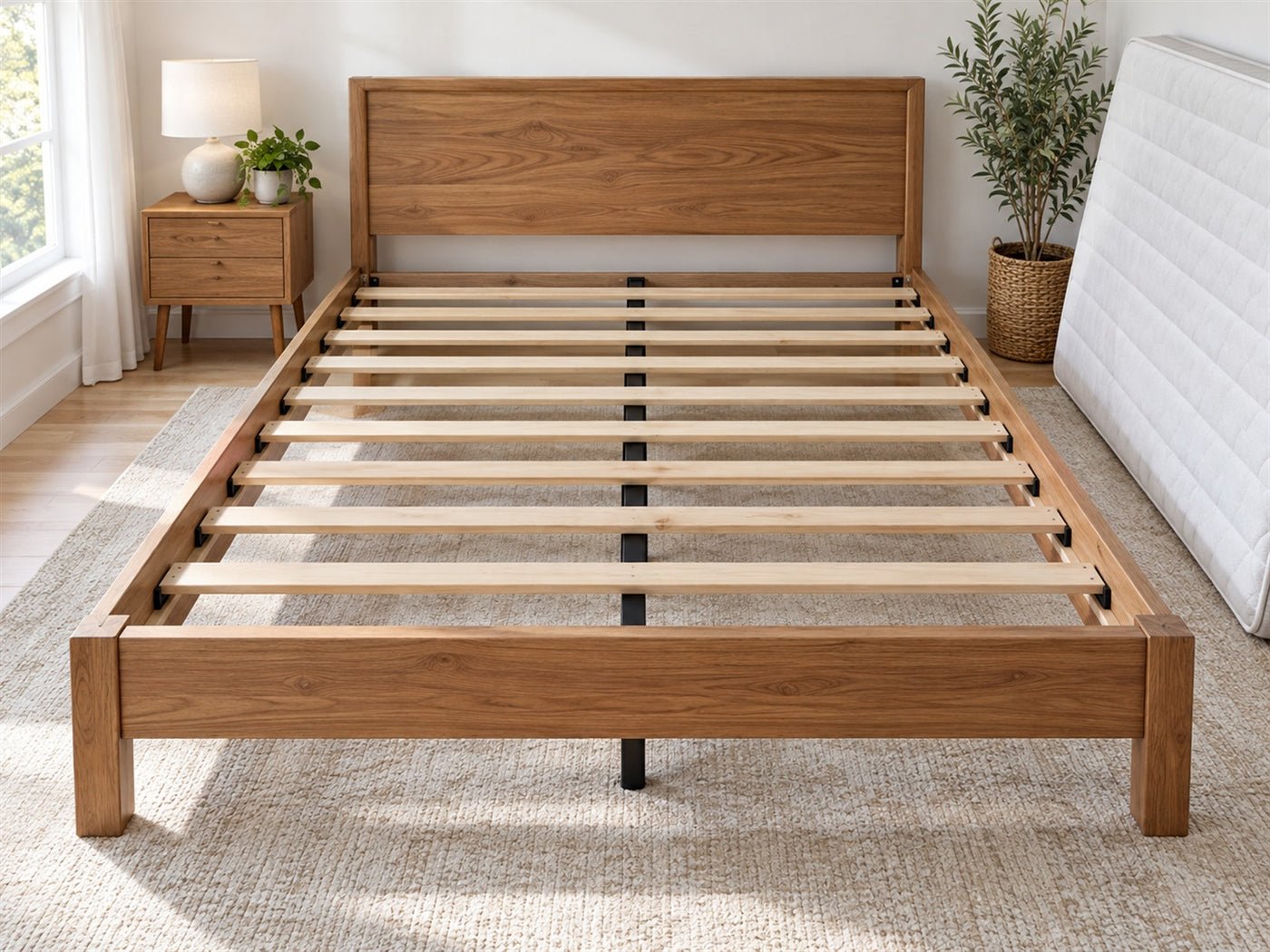
Lift the mattress off any frame, and the most important details are right there. Slats should be sturdy, evenly spaced, and fixed so they cannot shift. Many mattress makers suggest slats no more than about three inches apart, especially for foam and hybrid mattresses, so check your mattress's guidance.
Look at the side rails and corners, too. Solid wood or strong metal rails, firm joints, and secure corner brackets keep a bed quiet and stable. A frame that wobbles in the showroom will not get better at home.
Queen and King Bed Frames Need Extra Support
Size changes everything underneath. A standard queen mattress measures about 60 by 80 inches, and a king about 76 by 80 inches. Wider mattresses mean longer slats spanning a bigger gap and more weight in the middle of the bed.
That is why a queen bed frame in Victoria homes should have a centre support rail with at least one leg to the floor, and a king bed frame in Victoria bedrooms usually needs a centre rail with several legs. Without it, slats can sag over time and the mattress loses support where you sleep.
Platform Beds and Adjustable Bases
Platform beds in Victoria homes are popular because they support the mattress directly on a solid deck or closely spaced slats, so you usually do not need a box spring. They have a clean, modern look and often sit a little lower.
If you are considering an adjustable base, check that the frame is designed to work with it, or that the base can stand on its own inside the frame. Ask about weight limits and how the frame handles the base's motor and wiring.
Wood, Metal, and Upholstered Frames
Solid wood frames feel warm and sturdy and can last for decades. Metal frames are strong and slim, though they can squeak if bolts loosen. Upholstered frames add a soft headboard for reading in bed and a cozy look, and many are built around a hardwood frame underneath.
Whichever you choose, tighten bolts once or twice a year. Dry indoor heat in winter can make wood shrink slightly, which is often the cause of a new squeak.
Room Size and Clearance
As a rough rule, a queen bed works best in a room of at least about 10 by 10 feet, and a king in a room of at least about 12 by 12 feet. Leave about 30 inches on each side and at the foot of the bed for walking and opening drawers.
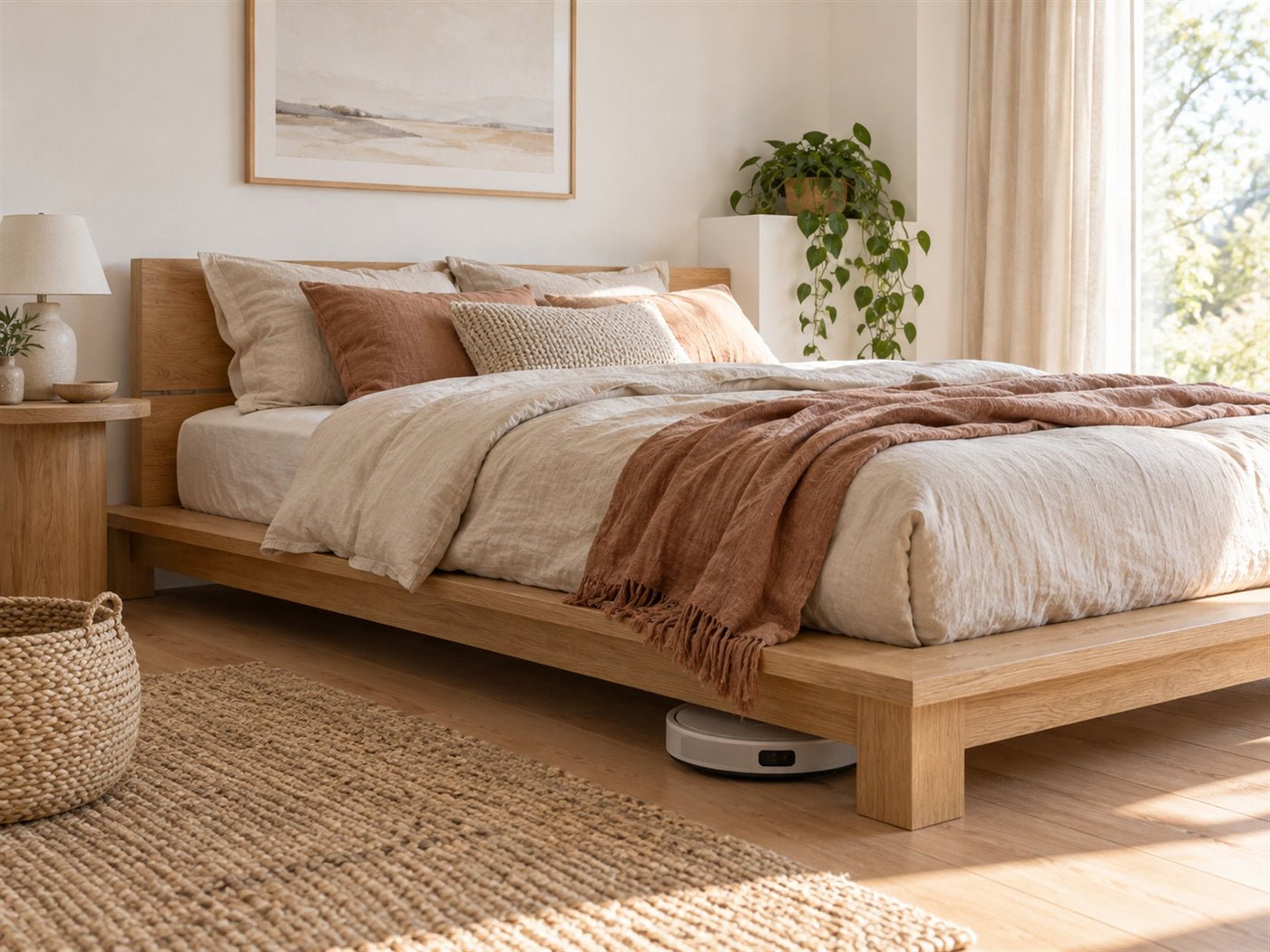
If you use a robot vacuum, measure its height and check the gap under the frame, since many need about four inches to slide underneath.
Testing Victoria Bed Frames in Person
Numbers help, but nothing replaces sitting on the bed. When you compare Victoria bed frames in a showroom, sit on the edge, lie down, and roll over a few times. Listen for creaks and feel for any shift in the frame. Press on the middle of the mattress to check that the support underneath feels even.
If you can, bring your own pillow and spend a few minutes lying in your usual sleeping position. Try getting up the way you do in the morning, too. A frame that feels easy to get in and out of after five minutes in the showroom is a good sign it will suit you at home. Ask how the frame is built, what the slats are made of, and how the headboard attaches. Clear answers to those questions are a sign of good Victoria bed frames.
Choose Your Bed Frame With Showhome Furniture
Our custom beds are Canadian-made in Vancouver on solid hardwood frames, in queen and king sizes, with a wide choice of fabrics. At our Langford showroom, you can sit on the edge of different beds, try the knee test, and compare headboard heights in person.
Bring your knee measurement, your mattress thickness, and your bedroom size, then book a free design consultation. Our team can then recommend Victoria bed frames with the right height and support for the way you sleep.
Good to know
Frequently Asked Questions
How high should a bed be?
The top of the mattress should sit close to the back of your knee when you sit with feet flat. For many adults that is about 20 to 25 inches.
How do I find my ideal bed height?
Sit on a chair with feet flat and knees bent at a right angle, then measure from the floor to the back of your knee.
How far apart should bed slats be?
Many mattress makers suggest no more than about three inches apart. Check your mattress's guidance.
Does a queen bed frame need centre support?
Yes. A centre rail with at least one leg to the floor keeps slats from sagging.
How much support does a king frame need?
A king usually needs a centre rail with several legs because the mattress is much wider.
Do I need a box spring with a platform bed?
Usually not. Platform beds support the mattress on a solid deck or closely spaced slats.
How can I lower a bed that is too high?
Choose a lower frame, skip the foundation, or pick a slimmer mattress.
Why does my bed squeak in winter?
Dry indoor heat can make wood shrink slightly and loosen bolts. Tighten them once or twice a year.
What headboard heights do your beds come in?
Some of our custom beds come with headboard height options such as 53 or 68 inches. Ask our team about each style.
Where is Showhome Furniture located?
Our showroom is located in Langford and serves homeowners throughout Victoria and Vancouver Island, including Saanich, Colwood, and James Bay.