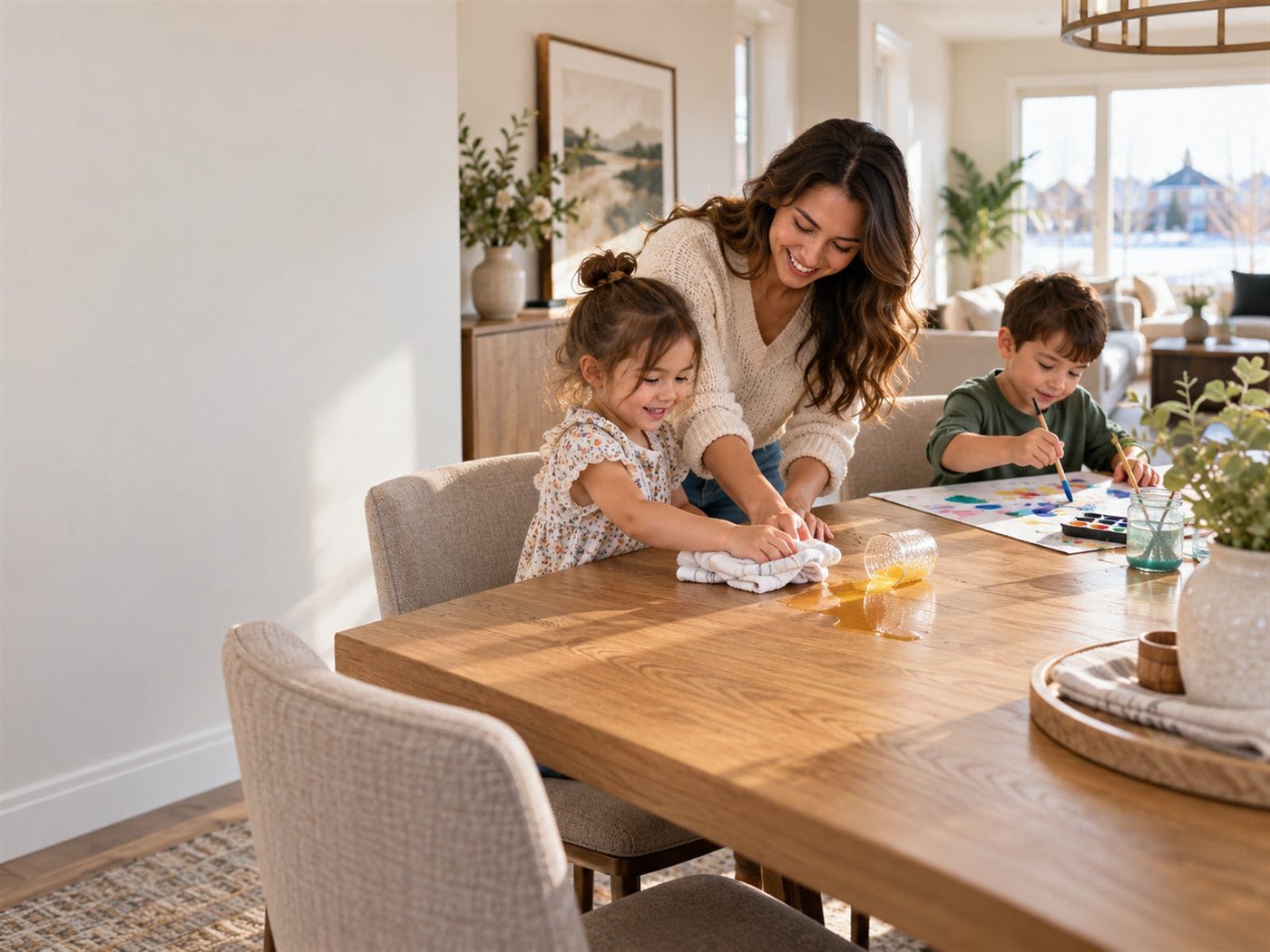
It is a Tuesday evening. One child is finishing a poster for school, another is colouring beside the fruit bowl, and someone just knocked over a cup of milk. By the time dinner goes on the table, the surface has already worked a full shift.
That is everyday life for most families, and it is why the material you choose for a Victoria dining table matters as much as its size or style. This guide is for parents and busy households who want a table that handles spills, homework, and holiday meals without constant worry. It compares the most common tabletop materials, explains how finishes protect them, and helps you match the surface to the way your family lives.
Start With Your Family's Week
Before you compare materials, think about what your table goes through in an ordinary week. Toddlers bring sticky hands and dropped cups. School-age kids bring markers, glue, and paint. Teenagers may treat the table as a desk for laptops and textbooks. Dogs and cats can scratch legs and chair rails, and hosting brings hot serving dishes and wine glasses.
Write down your top three habits. If spills and art projects happen daily, a surface that wipes clean and resists stains should come first. If you hope to keep the table for decades, a material you can sand and refinish may matter more. If you love a warm, natural look, you may be happy to trade a little extra care for that feeling.
Victoria Dining Table Materials at a Glance
Most tables fall into a handful of groups. Solid wood is warm, sturdy, and repairable. Wood veneer puts a thin layer of real wood over a stable core. Ceramic and sintered stone are engineered surfaces that shrug off heat and stains. Marble is natural stone with beautiful veining, and tempered glass keeps a small room feeling open.
No single material wins for every household, so compare them on what matters at home: scratch resistance, heat resistance, stain resistance, how easy repairs are, weight, and how the surface feels under your hands. When you shop for a Victoria dining table, it helps to rank those six points for your own family before you fall for a look.
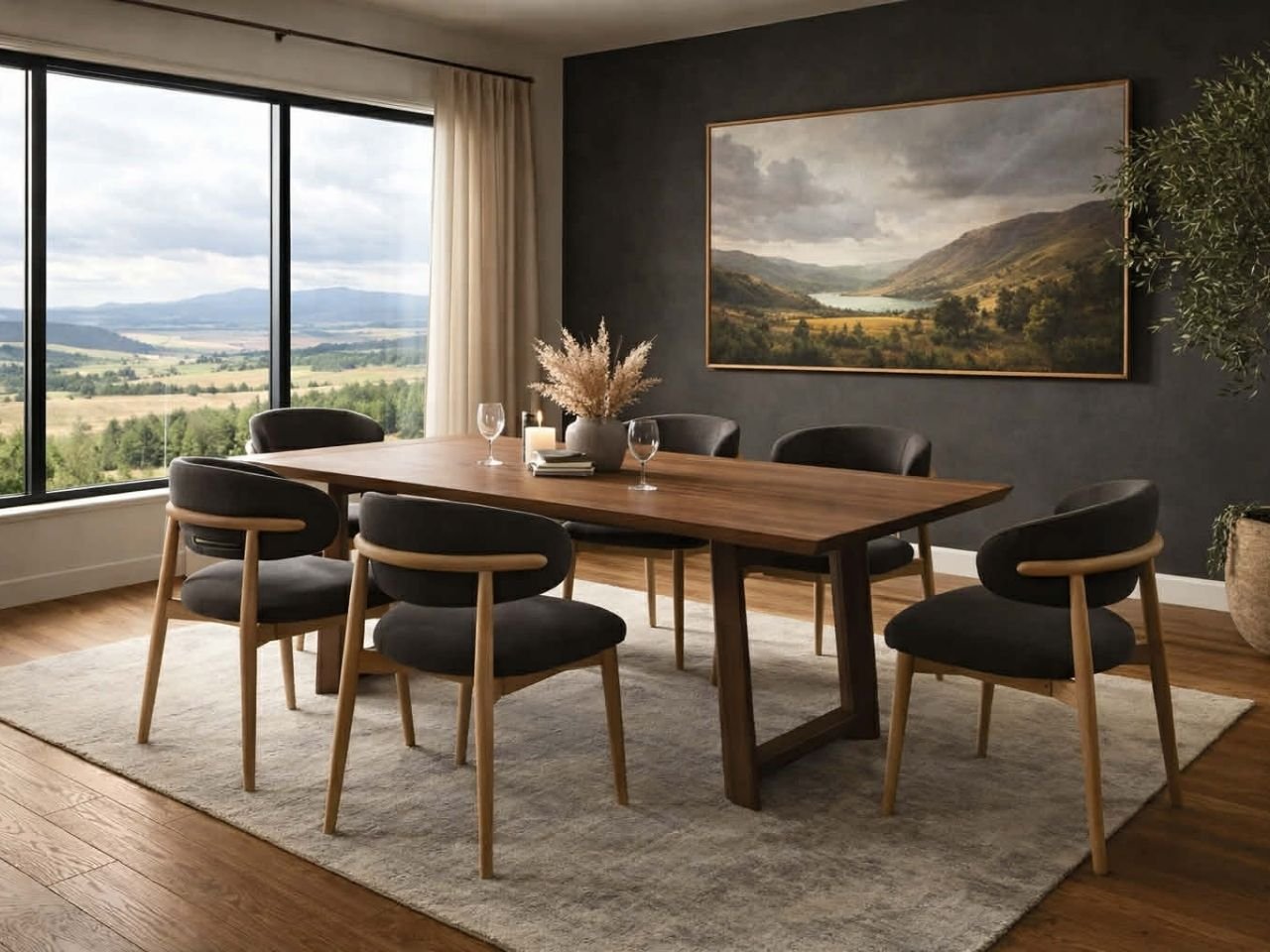
Sealed Solid Wood: Warm and Repairable
Solid wood is the classic family choice. It feels warm, it is strong, and when it gets scratched it can usually be sanded and refinished rather than replaced. Hardwoods such as oak and acacia are dense, so they resist dents from dropped forks and heavy pencil pressure better than softer woods.
Softwoods such as pine dent more easily, but many families love how a rustic table collects small marks over time. A distressed or rustic finish hides wear well, since new dings blend into the texture. If you want a top that stays smooth for years, choose a hardwood with a protective finish.
Veneer: Real Wood Grain With Extra Stability
Veneer means a fine sheet of real wood bonded to a core of hardwood solids, plywood, or engineered wood. You get real grain at a lower cost, and because the core is so stable, veneer tables are less likely to warp or split when indoor humidity shifts between damp coastal winters and dry furnace heat.
Veneer also gives you even, matching grain across the whole top, including the leaves on many extension tables. The trade-off is repairability. The wood layer is thin, so deep scratches or chips cannot be sanded out the way they can on solid wood. A good finish on top is your best protection.
Finishes and Sheens That Forgive Fingerprints
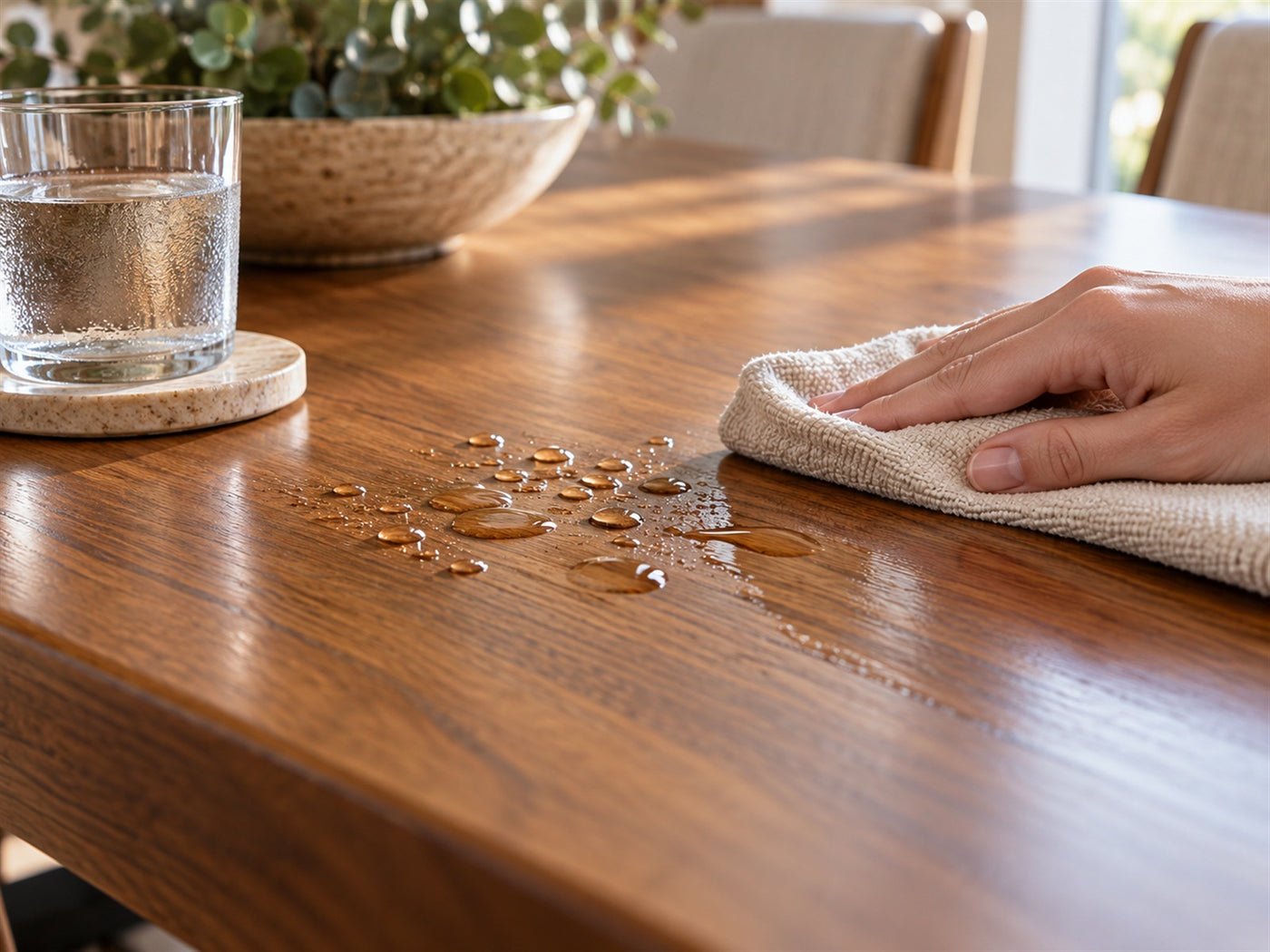
The finish matters as much as the wood. Lacquer, polyurethane, and varnish form a protective film on the surface, so spills bead up and wipe away. Oil and hardwax finishes soak into the wood instead, which gives a soft, natural feel but needs topping up every six to twelve months.
For homes with young kids, a lacquer or polyurethane finish is usually the easiest to live with. Satin and matte sheens hide fingerprints and fine scratches better than high gloss. Ask how a table is finished before you buy, since two tables made from the same wood can wear very differently.
Ceramic and Sintered Stone for Messy Meals
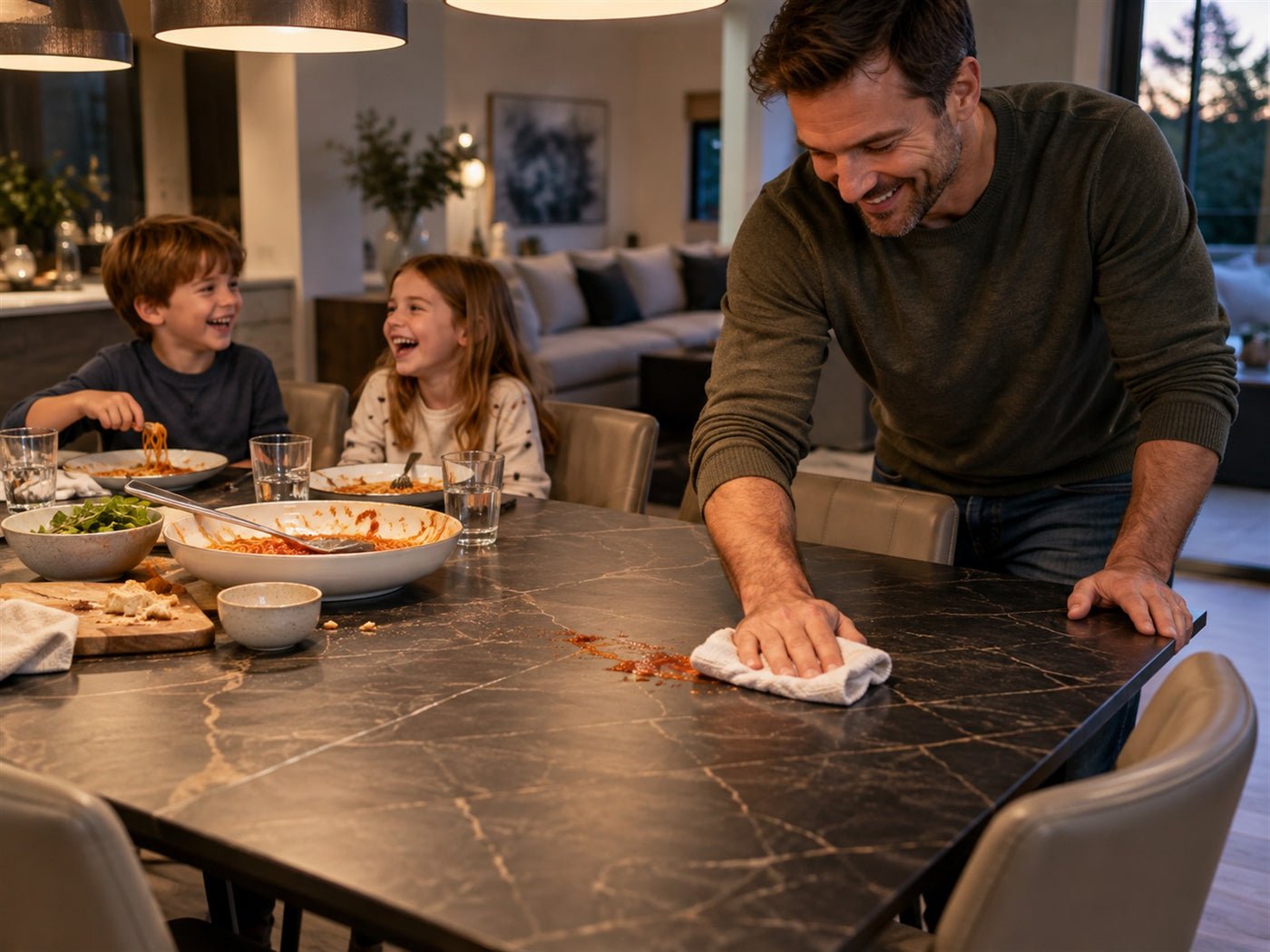
Ceramic and sintered stone tops are made by pressing and firing minerals at very high heat. The result is a dense, hard surface that resists scratches, hot dishes, stains, and moisture. Pasta sauce, juice, and crayon usually come off with warm water and mild soap.
These tops are heavy, so they need a sturdy base, and the edges can chip if they are hit hard with something heavy. Many come in stone-look or matte finishes that suit modern and coastal rooms. If this sounds like the right fit for your family, ask our team which ceramic tops are currently available to order.
Marble and Glass: Beautiful With a Little Care
Marble brings natural veining that makes every top one of a kind. It stays cool to the touch and pairs well with wood and metal bases. It is also porous, so wine, citrus, and tomato sauce can stain or etch the surface if they sit. Regular sealing, coasters, and quick cleanups keep it looking its best.
Tempered glass lets light pass through, which makes a small dining area feel bigger. It is easy to wipe and does not stain, but it shows every handprint and can sound loud when plates go down. In homes with small children, look for rounded or bevelled edges. Our selection includes some marble and glass tops for families happy to give them that extra attention.
Round and Extendable Tables: Material Matters Too
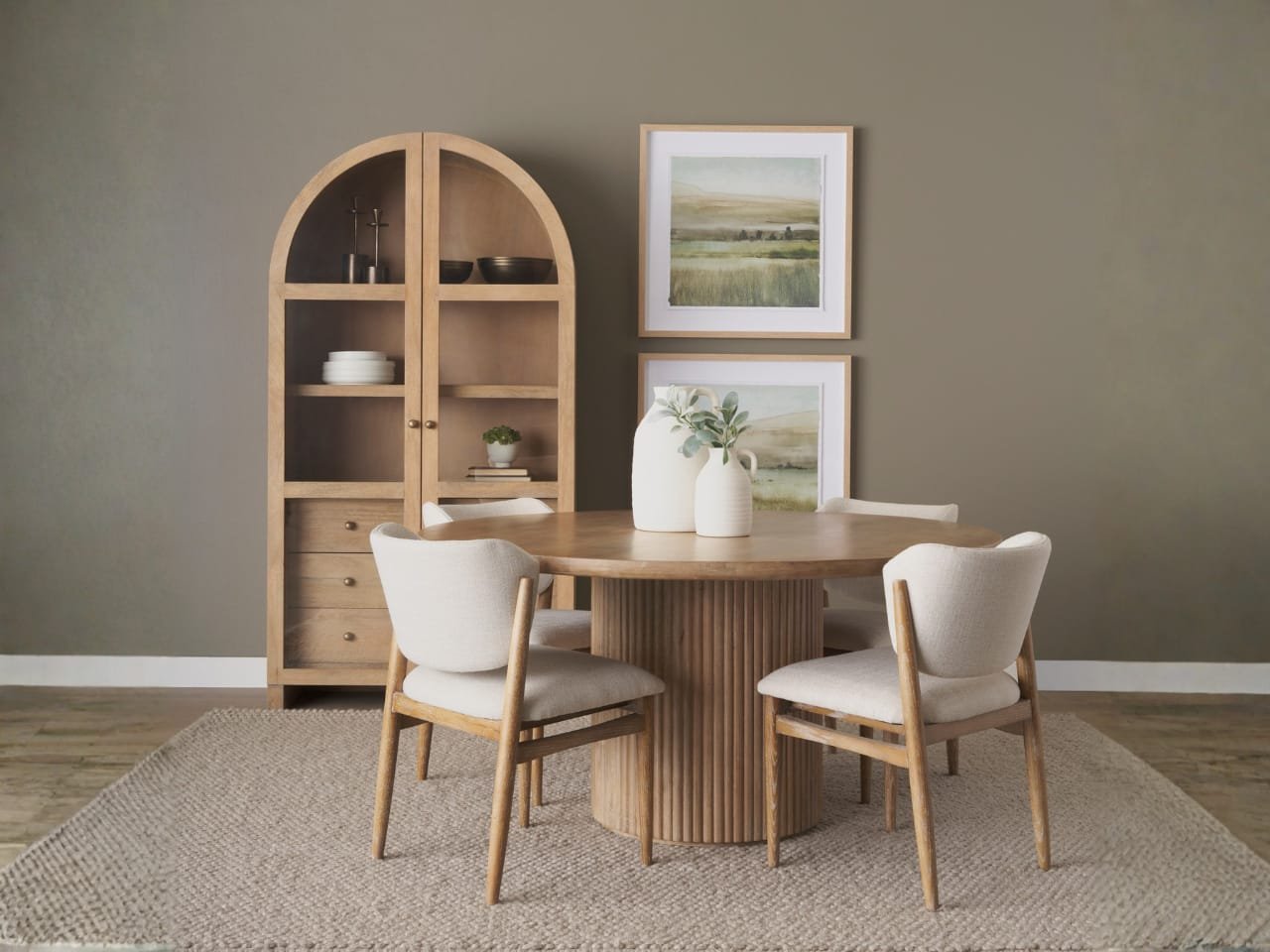
Shape changes what works. A Victoria round dining table on a pedestal base needs a well-balanced top, and heavy stone or ceramic tops need a wide, weighted base so the table stays steady when a child leans on the edge. Round tables also suit young families because there are no sharp corners.
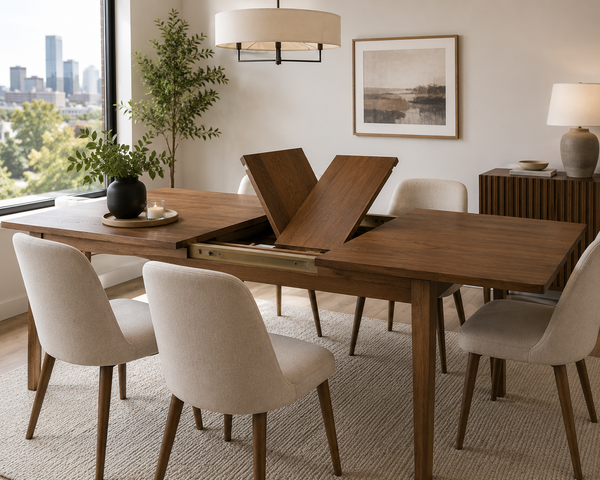
Extension tables bring the leaves into the picture. On a Victoria extendable dining table in solid wood, leaves stored away from light may age to a slightly different colour than the top. Storing leaves inside the table, or using them now and then, keeps the tone closer. Veneer and ceramic leaves tend to stay a closer match.
Chairs, Benches, and the Full Victoria Dining Table Set
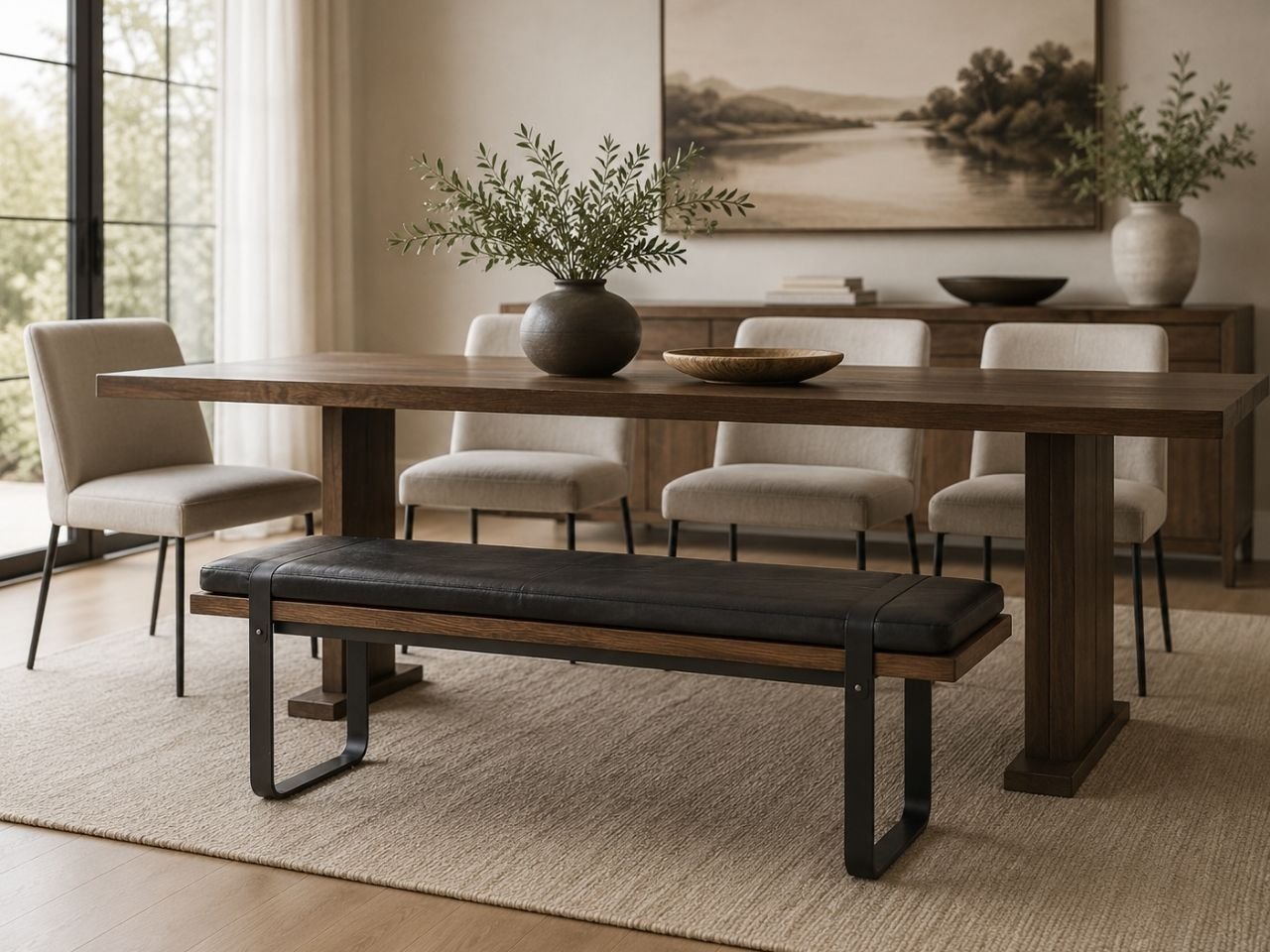
Chairs take as much daily wear as the table. Wood chairs are sturdy and easy to wipe. Upholstered chairs are comfortable for long meals, and performance fabrics resist spills. Faux leather and vinyl wipe clean in seconds, which helps with toddlers. A bench on one side seats more kids and tucks away neatly after dinner.
When you choose a Victoria dining table set, think about how the materials work together. A ceramic or glass top with upholstered chairs softens the look. A wood table with wood chairs feels warm and traditional. Mixing wood chairs on the sides with upholstered chairs at the ends adds interest without losing practicality.
Edges and Bases for Homes With Little Kids
Material is only part of a safe family table. Rounded or softened edges are kinder to small heads than sharp corners, and round or oval tops remove corners entirely. On glass and ceramic, bevelled edges are less likely to chip than square ones.
Check the base, too. A pedestal gives great legroom but needs a wide, heavy foot so it cannot tip. Four-leg and trestle tables are very stable, but make sure the legs leave room for a high chair or booster seat. These small checks make a big difference over the years your family uses the table.
Choose Your Victoria Dining Table With Showhome Furniture
Reading about materials helps, but nothing beats running your hand across a finish and seeing how a top looks in natural light. In our Langford showroom, compare wood, veneer, marble, and glass tables side by side and ask our team how each one holds up to kids, pets, and hosting.
Make a list of your family's habits, take a few photos of your dining area, then book a free design consultation. Our team can narrow down the Victoria dining table material that fits your household, and pair it with chairs that suit the way you live.
Good to know
Frequently Asked Questions
What is the most durable dining table material for families?
Ceramic and sintered stone are among the most durable, since they resist scratches, heat, and stains. Sealed solid hardwood is also durable and can be refinished.
Is solid wood a good choice with young kids?
Yes. Hardwoods resist dents well, and scratches can usually be sanded out. A lacquer or polyurethane finish makes daily cleanup easier.
What is the difference between solid wood and veneer?
Solid wood is the same wood all the way through. Veneer is a fine sheet of real wood over a stable core, which resists warping but cannot be deeply sanded.
Which finish is best for a family dining table?
A lacquer or polyurethane finish in a satin or matte sheen is easiest to clean and hides fingerprints and fine scratches.
Are ceramic tables good for messy meals?
Yes. Ceramic resists stains, heat, and scratches and cleans with soap and water. Choose rounded edges, since edges can chip if hit hard.
Is marble practical for a busy household?
Marble is beautiful but porous, so it can stain or etch. It suits families happy to seal it and wipe spills quickly.
Are glass dining tables safe for children?
Tempered glass is strong and breaks into small, blunt pieces if it shatters. Choose rounded or bevelled edges and expect to wipe fingerprints often.
What chair materials are easiest to clean?
Wood, faux leather, vinyl, and performance fabrics all wipe clean easily. A bench is also simple to clean and seats extra kids.
How can I get help choosing a table material?
Book a free design consultation and bring a list of your family's habits and a few photos of your space. Our designers can compare options with you in person.
Where is Showhome Furniture located?
Our showroom is located in Langford and serves homeowners throughout Victoria and Vancouver Island, including Saanich, Colwood, and James Bay.