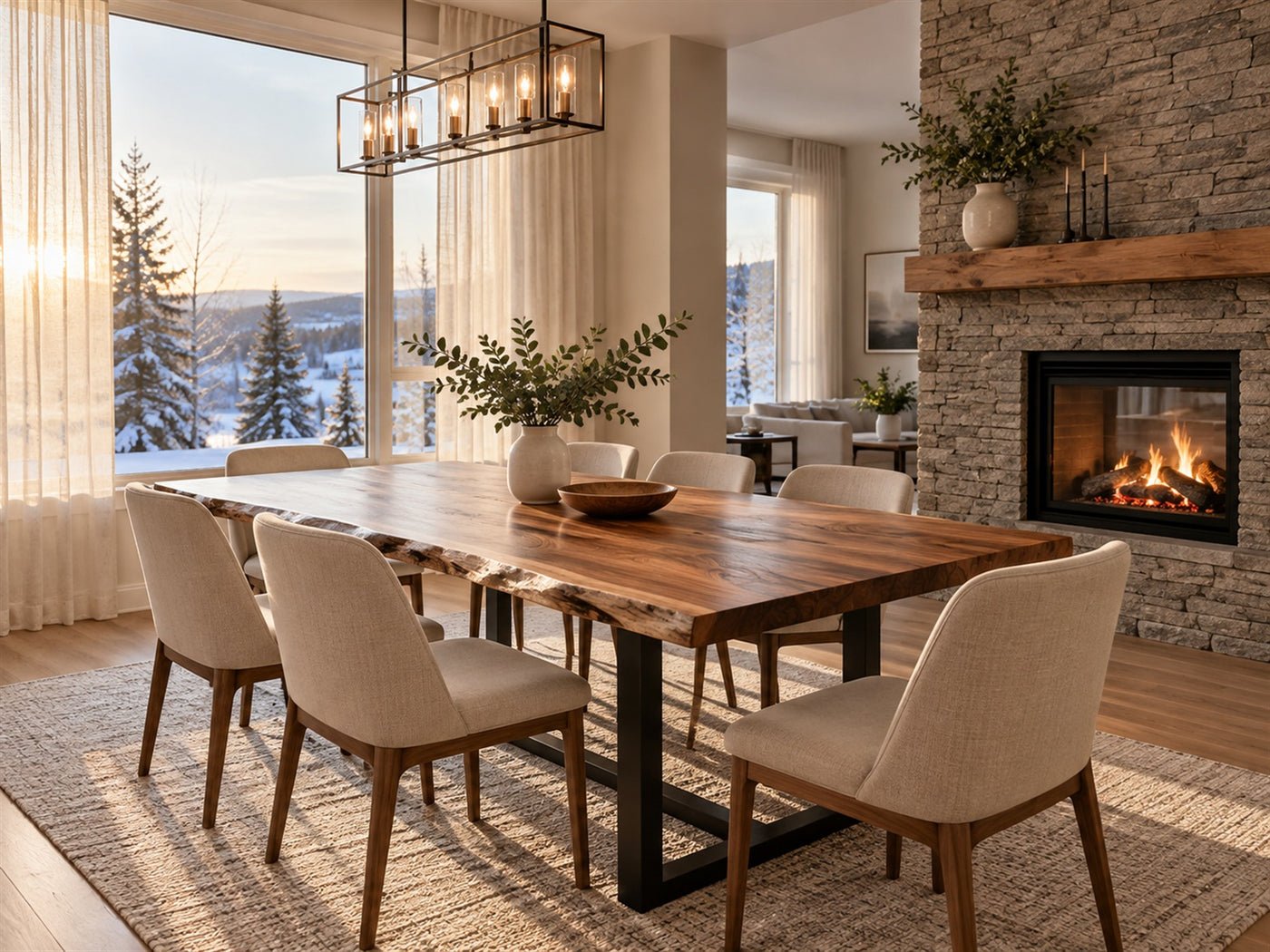
The first cold snap arrives, the heat pump starts running every evening, and one morning you notice a fine line along the edge of your table that was not there in September. It is a small thing, but it can make any owner of a solid wood table nervous.
Outside, Victoria winters are damp and grey. Inside, it is a different story. Furnaces, baseboard heaters, heat pumps, and gas fireplaces all pull moisture out of the air, and that dry indoor air is what solid wood feels most. This guide is for anyone who owns, or is about to bring home, a Victoria live edge dining table and wants to keep it looking its best from the first heating day of fall to the first warm week of spring.
Why Indoor Heat Is Hard on a Victoria Live Edge Dining Table
Wood is made of fibres that hold moisture, a little like a sponge. When the air around it gets drier, the wood gives up some of that moisture and shrinks slightly. When the air gets damper, it swells again. This happens to every solid wood table, but live edge tops are thick and natural, so the movement can show more clearly.
On the island, the bigger swings often come from inside the house. A cozy living room with the heat running can sit far drier than the rainy air outside, and a room beside a wood stove or gas fireplace can be drier still. A Victoria live edge dining table that sits through months of that heat needs a little attention to stay stable.
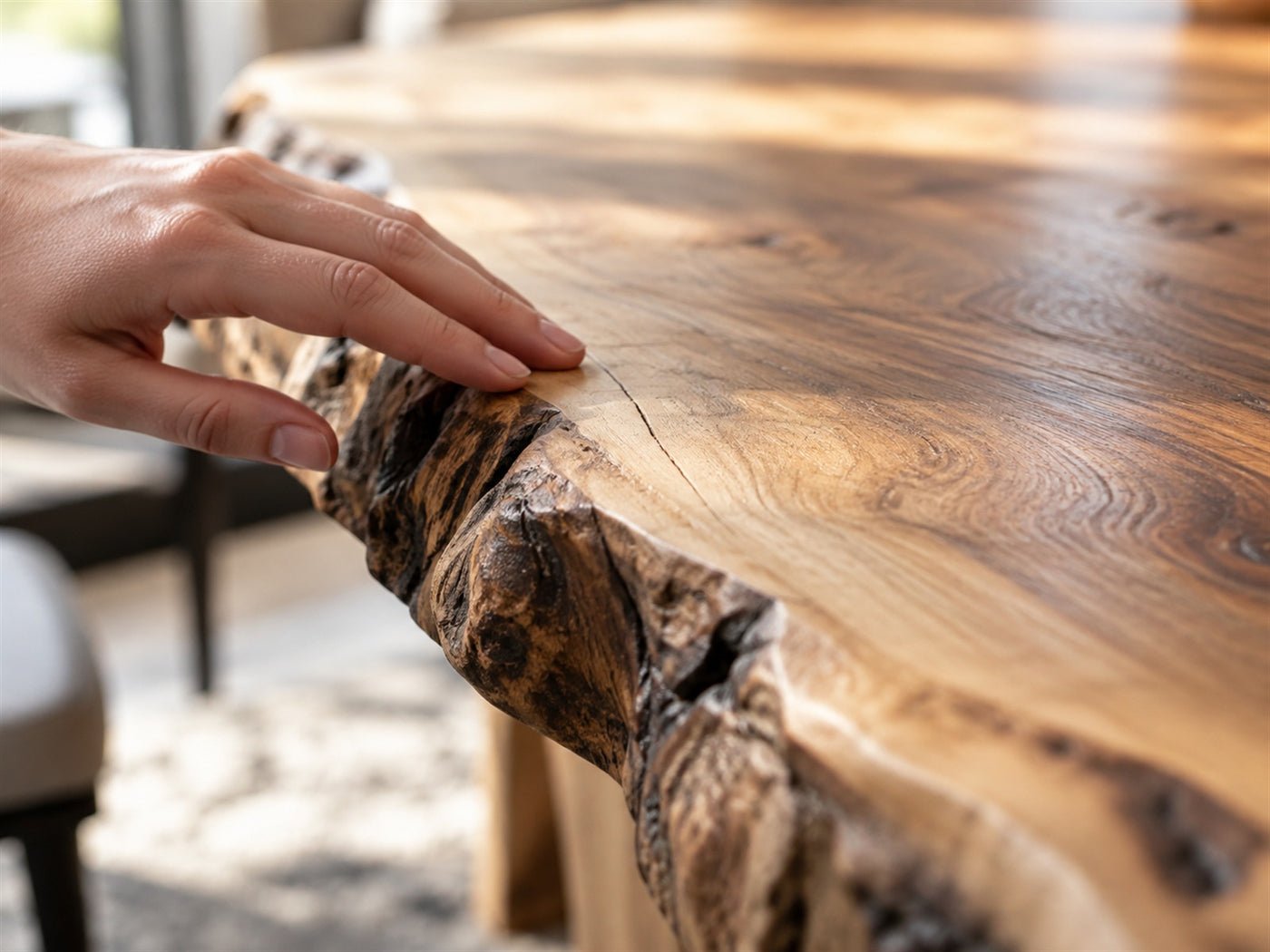
Signs Your Table Is Getting Too Dry
Dryness usually shows up in small ways first. Look for hairline cracks near knots or the ends of the slab, small gaps where boards meet, a finish that feels rough or looks dull, or a base that starts to wobble because the wood around the bolts has shrunk.
None of these signs means your table is ruined. Small checks are a normal part of natural wood, and most stop growing once the air around the table becomes steadier. The goal is to notice changes early, so you can adjust the room before small movement turns into a bigger crack.
The Right Humidity Range for Solid Wood
As a general guide, solid wood furniture is most comfortable when indoor relative humidity stays around 35 to 45 percent. Many furniture makers accept a broader range of about 35 to 55 percent. Below about 30 percent, wood is more likely to shrink and check.
Steady conditions matter more than hitting an exact number. A table that lives at 40 percent all winter is happier than one that jumps between 25 and 55 percent every few days. A small, inexpensive hygrometer near the table tells you what the room is doing, so you are not guessing.
Using a Humidifier Without Overdoing It
If your hygrometer reads low through the heating season, a humidifier in the dining area or a whole-home system can help. Aim for the middle of the range rather than the top, and clean the unit regularly so it stays fresh.
Keep the humidifier a few feet from the table so mist never settles on the wood. In damp coastal homes, watch for condensation on windows. If windows start fogging up, the air is likely moist enough, and you can turn the humidifier down.
Where to Place Your Table for the Winter
Placement makes a big difference for a Victoria live edge dining table. Keep it away from heat registers, baseboard heaters, wood stoves, and gas fireplaces, since direct heat dries one part of the slab faster than the rest. A gap of a few feet is a good habit, and more is better near a fireplace.
Low winter sun can also heat one end of a table through a south-facing window. Sheer curtains or light-filtering blinds soften that heat and protect the finish from fading. Rotate centrepieces and placemats now and then, so the top ages evenly instead of leaving lighter patches.
The First Winter: Letting a New Table Settle
A new table needs time to adjust to your home. Wood that was stored in a warehouse or showroom with different conditions will slowly match the moisture of your room over the first weeks and months. That is normal, and the first heating season is when you are most likely to see small movement.
Give a new table a steady spot, check the hygrometer, and avoid placing it right beside a heat source while it settles. Store any removable leaves in the same room as the table, so they adjust to the same air and stay a closer match in size and colour.
Finish Care: Oil, Hardwax Oil, and Lacquer
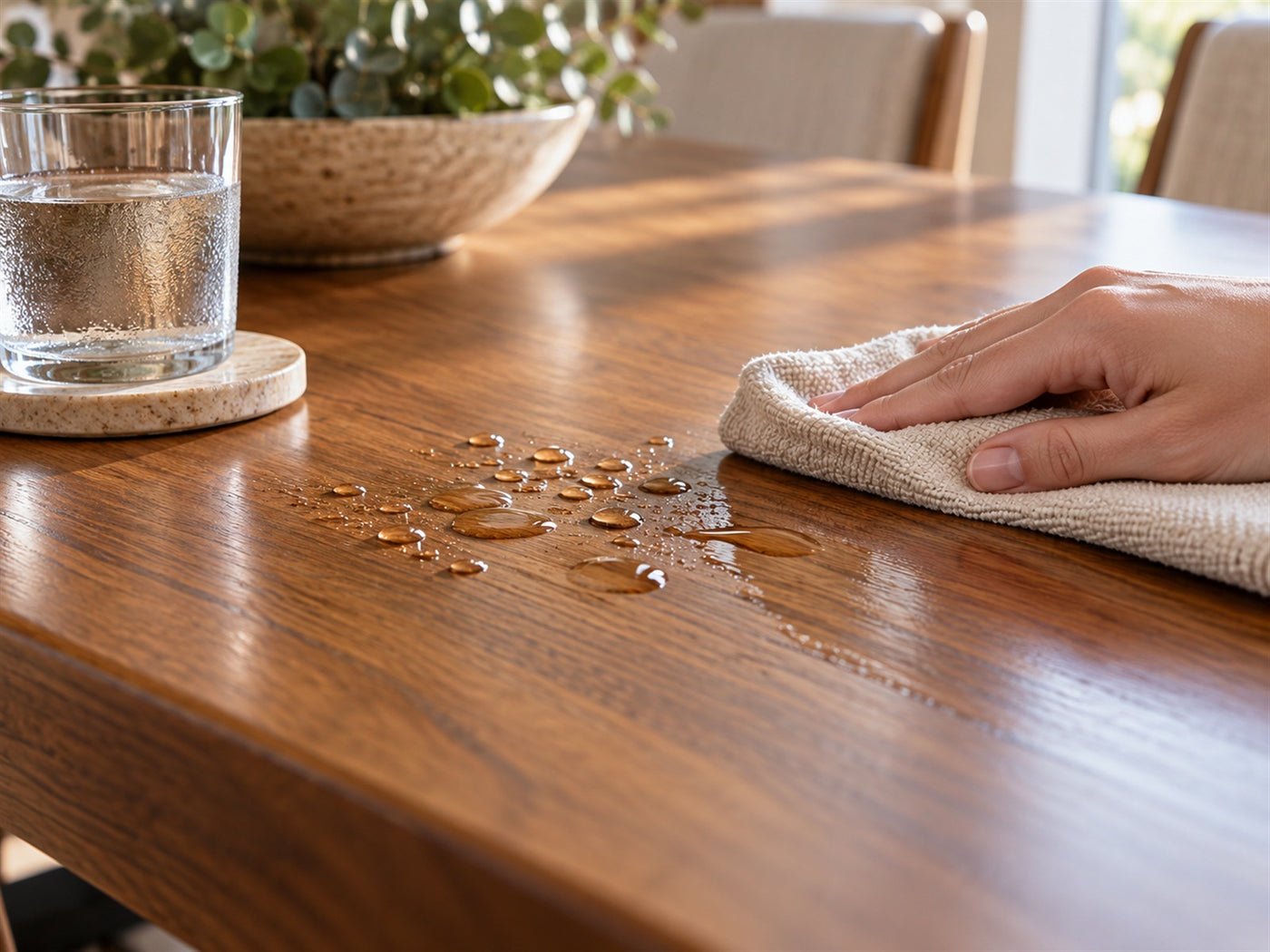
Oil and hardwax oil finishes soak into the wood and give a soft, natural feel. Dry winter air can make them look thirsty sooner. Many makers suggest re-oiling daily-use tables every six to twelve months, and hardwax oils about once a year. Fall, before the heating season starts, is a good time to do it.
Lacquer and polyurethane finishes form a protective film on top, so they need less maintenance. Clean them with a soft, slightly damp cloth and dry them right away. Avoid silicone polishes and harsh cleaners, which can leave residue or dull the surface over time. Always follow the finish maker's guidance.
Epoxy Fills and Natural Checks
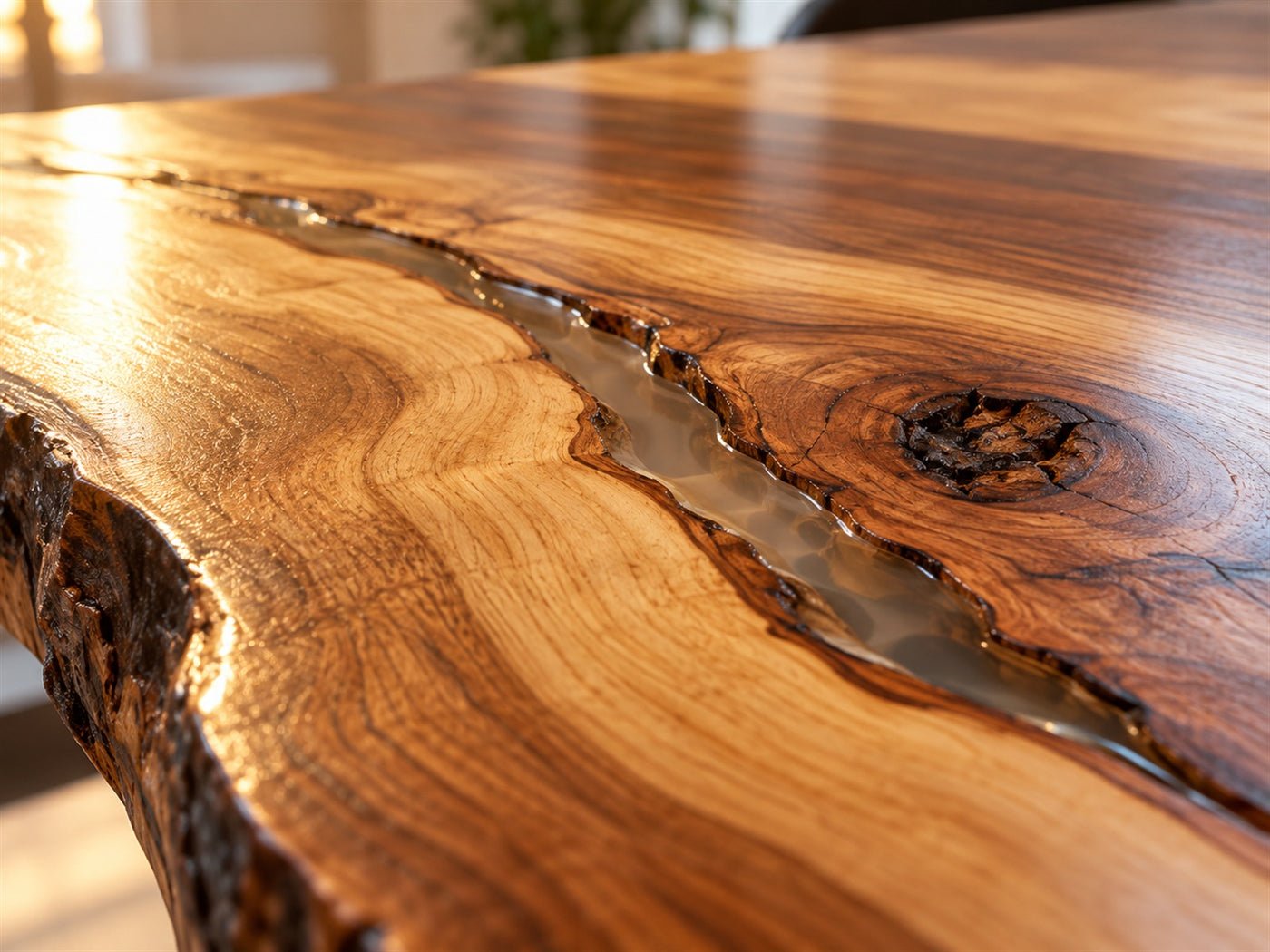
Many live edge tops have cracks or knots filled with clear or tinted epoxy. Epoxy does not move with the seasons the way wood does, so you may notice a fine line where the two meet after a dry spell. That is usually cosmetic and settles as humidity steadies.
If a new crack opens wider than a credit card's thickness, or a fill feels loose or sharp, ask a professional for advice before trying a repair yourself. Small hairline checks are part of the character that makes live edge tables special.
Holiday Season Protection
Winter is also hosting season. Use trivets under hot dishes, coasters under drinks, and a runner or placemats under candles and centrepieces. Wipe spills quickly, especially red wine and gravy, and avoid sliding heavy serving dishes across the top.
Check the base before a big gathering, too. If the table wobbles, gently tighten the bolts that hold the base to the top. Wood shrinks a little in dry air, so a quick check each winter keeps everything solid.
Caring for Victoria Solid Wood Furniture Beyond the Table
The same habits protect other wood pieces in your home. A Victoria solid wood dining table, a sideboard, and a bench in the same room all benefit from steady humidity, distance from heaters, and gentle cleaning. Victoria solid wood furniture lasts longest when the whole room stays comfortable.
If you are shopping for a Victoria custom dining table or a new solid wood piece, ask how the wood was dried and what finish it has. Kiln-dried wood and a quality finish both help a table handle the change from damp fall air to dry winter heat.
Get Winter Care Advice From Showhome Furniture
Caring for natural wood is easier when you know what to expect. Our Langford showroom team can talk you through finishes, placement, and humidity for any live edge or solid wood table, whether you are buying new or caring for a piece you already love.
Bring a photo of your dining room, note where your heat sources and windows are, and book a free design consultation. We will help you find the best spot for your Victoria live edge dining table and a simple routine to keep it beautiful all winter.
Good to know
Frequently Asked Questions
What humidity is best for a live edge table?
Around 35 to 45 percent is a good general target. Steady conditions matter more than an exact number.
Why does my wood table crack in winter?
Indoor heat dries the air, and solid wood shrinks slightly as it loses moisture. That can open small checks, especially near knots and ends.
Are small cracks in a live edge table normal?
Yes. Small hairline checks are a normal part of natural wood and usually settle once humidity is steadier.
Should I use a humidifier for wood furniture?
If your home reads below about 30 percent in winter, a humidifier can help. Keep it a few feet from the table.
Where should I not put a live edge table?
Avoid placing it right beside heat registers, baseboard heaters, wood stoves, fireplaces, or in strong direct sun.
How often should I re-oil an oiled table?
Many makers suggest every six to twelve months for daily-use tables, or about once a year for hardwax oil. Follow your maker's guidance.
How do I clean a live edge table?
Use a soft, slightly damp cloth, dry it right away, and avoid harsh cleaners and silicone polishes.
Why does my table wobble in winter?
Wood shrinks slightly in dry air, which can loosen base bolts. Gently tightening them usually fixes the wobble.
Can you help me care for my table?
Yes. Book a free design consultation and our team can talk through placement, finishes, and humidity for your home.
Where is Showhome Furniture located?
Our showroom is located in Langford and serves homeowners throughout Victoria and Vancouver Island, including Saanich, Colwood, and James Bay.